आपने ₹5 लाख का Personal Loan लिया था।
कुछ साल EMI भरने के बाद app में outstanding amount दिख रहा है:
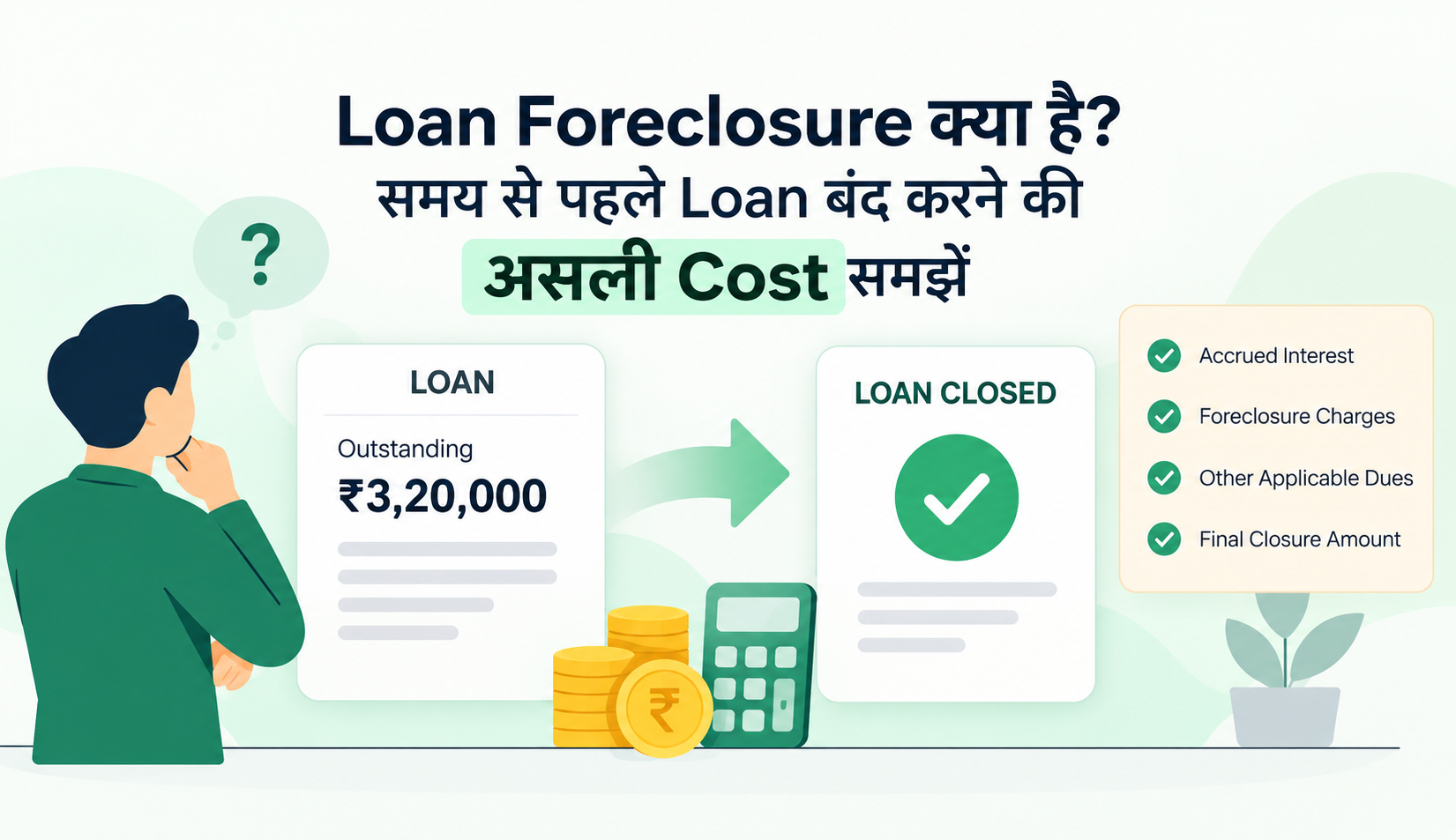
₹3,20,000
अब आपको bonus मिला और आपके पास Loan बंद करने के लिए पर्याप्त पैसा है।
पहला thought हो सकता है:
“₹3.20 लाख बाकी हैं। इतना pay कर दूंगा और Loan खत्म।”
लेकिन Loan foreclosure हमेशा इतना simple नहीं होता।
आपका Outstanding Principal ₹3.20 लाख हो सकता है, लेकिन lender द्वारा दिया गया Final Foreclosure Amount इससे अलग हो सकता है।
क्यों?
क्योंकि final closure calculation में outstanding principal के अलावा applicable accrued interest, pre-payment/foreclosure charges या अन्य legitimate dues शामिल हो सकते हैं।
और सबसे महत्वपूर्ण सवाल:
क्या Loan जल्दी बंद करने पर foreclosure charge लगेगा भी?
इसका जवाब सिर्फ “हाँ” या “नहीं” नहीं है।
Loan fixed है या floating, personal है या business purpose के लिए, कब sanctioned/renewed हुआ और lender किस category का है—इन सबका असर हो सकता है। RBI ने pre-payment charges के लिए specific rules बनाए हैं।
आइए पूरी process आसान भाषा में समझते हैं।
Loan Foreclosure क्या होता है?
Loan Foreclosure का मतलब है:
Scheduled tenure पूरा होने से पहले पूरे outstanding Loan को repay करके Loan account बंद करना।
मान लीजिए आपका Loan अभी 24 महीने और चलना था।
लेकिन आप आज पूरा applicable closure amount चुका देते हैं।
तो बाकी 24 EMIs का इंतजार करने के बजाय Loan पहले ही close हो जाता है।
इसे अलग-अलग lenders के documents में इन नामों से भी देखा जा सकता है:
Foreclosure
Pre-closure
Full Pre-payment
Early Loan Closure
इनका exact contractual meaning lender documentation में check करना चाहिए।
Foreclosure और Part-Payment एक ही चीज नहीं हैं
यह confusion बहुत common है।
Part-Payment
आप outstanding principal का कुछ हिस्सा extra pay करते हैं।
उदाहरण:
Outstanding Loan = ₹3,20,000
Extra Payment = ₹1,00,000
Loan खत्म नहीं हुआ।
Remaining principal अभी भी repay करना है।
इसके बाद EMI या tenure बदल सकती है, lender/product terms के अनुसार।
Foreclosure
आप applicable पूरी closure liability pay करते हैं।
इसके बाद Loan account close किया जाता है।
यानी:
Part-Payment = Loan कम करना
Foreclosure = Loan पूरा बंद करना
Outstanding Principal और Foreclosure Amount में क्या फर्क है?
यही इस article का सबसे important practical point है।
मान लीजिए app में:
Outstanding Principal = ₹3,20,000
दिख रहा है।
यह जरूरी नहीं कि आज Loan बंद करने के लिए आपको exactly ₹3,20,000 ही देना हो।
Illustratively, foreclosure statement कुछ ऐसा दिख सकता है:
Particular | Illustrative Amount |
|---|---|
Outstanding Principal | ₹3,20,000 |
Accrued Interest | ₹2,500 |
Applicable Foreclosure Charge | ₹0 / lender-specific |
Other applicable disclosed dues | ₹500 |
Illustrative Closure Amount | ₹3,23,000 |
यह सिर्फ example है।
Actual foreclosure statement lender, payment date, loan contract और applicable regulatory framework के अनुसार अलग होगा।
इसलिए app में दिख रहे Outstanding Balance को final payable amount मानकर सीधे payment करना सही approach नहीं है।
पहले lender से Foreclosure / Pre-closure Statement लेना बेहतर है।
Foreclosure Amount कैसे बन सकता है?
Conceptually इसे ऐसे समझ सकते हैं:
Foreclosure Amount ≈
Outstanding Principal
+ Accrued Interest
+ Applicable Pre-payment/Foreclosure Charges
+ Other Applicable Disclosed Dues
− Eligible Adjustments/Credits
हर component हर Loan में लागू हो, यह जरूरी नहीं है।
उदाहरण के लिए कुछ eligible floating-rate loans पर pre-payment charge permitted ही नहीं होगा।
इसलिए calculator से सिर्फ principal देखकर foreclosure amount assume नहीं करना चाहिए।
क्या Loan Foreclosure पर Charge लगता है?
यहीं blanket statements से बचना जरूरी है।
पुराना generic advice:
“Loan जल्दी बंद करोगे तो foreclosure charge लगेगा।”
हमेशा सही नहीं है।
और इसका उल्टा:
“RBI ने foreclosure charges खत्म कर दिए हैं।”
यह भी हर Loan के लिए सही नहीं है।
Current rules को थोड़ा carefully समझना होगा।
1 January 2026 से RBI के Pre-payment Rules क्या कहते हैं?
RBI की Pre-payment Charges on Loans Directions, 2025 उन loans और advances पर लागू होती हैं जो 1 January 2026 या उसके बाद sanctioned या renewed हुए हैं.
Individual + Non-Business Purpose + Floating Rate
अगर Loan:
Individual borrower का है
Business purpose के लिए नहीं है
और Floating Rate पर है,
तो RBI-regulated lender covered by these directions pre-payment charge नहीं लगा सकता, चाहे co-obligant हो या न हो.
इसलिए eligible floating-rate personal-purpose loan में:
Part-prepayment हो या full prepayment/foreclosure—pre-payment charge नहीं होना चाहिए।
RBI directions यह protection source of funds की परवाह किए बिना और बिना minimum lock-in period के लागू करती हैं.
इसका मतलब हर Personal Loan पर Zero Foreclosure Charge है?
नहीं।
सबसे पहले देखें:
Loan floating rate है या fixed rate?
RBI की ऊपर बताई prohibition floating-rate loans के लिए है।
Fixed-rate Loan को automatically उसी rule में डालना सही नहीं होगा।
ऐसे cases में applicable charges lender की approved policy, loan agreement और अन्य applicable regulations के अनुसार हो सकते हैं.
इसलिए सिर्फ यह देखकर कि:
“यह Personal Loan है”
zero foreclosure charge assume न करें।
Rate type भी check करें।
Fixed Rate Loan में क्या होगा?
अगर आपका Loan fixed interest rate पर है, तो applicable foreclosure/pre-payment terms अलग हो सकती हैं।
इसलिए तीन documents देखें:
1. Key Facts Statement (KFS)
2. Sanction Letter / Loan Agreement
3. Lender's current applicable Schedule of Charges
RBI's KFS framework is intended to give borrowers key loan information, including the all-in cost, in a standardized and understandable form.
अगर applicable foreclosure charge है, तो उसका basis समझें—सिर्फ percentage देखकर decision न लें।
Dual / Special Rate Loan हो तो?
कुछ Loans में fixed और floating दोनों phases हो सकते हैं।
उदाहरण:
पहले कुछ साल fixed rate, बाद में floating rate.
RBI's current framework says that for such dual/special-rate loans, applicability of the specified pre-payment protections depends on whether the loan is floating rate at the time of pre-payment.
इसलिए केवल original sanction letter में “fixed/floating” देखकर conclusion न निकालें।
Foreclosure के समय current rate structure check करें।
Business Loan में Rule अलग हो सकता है
यह भी important distinction है।
अगर Loan business purpose के लिए है, तो rules lender category और loan size के आधार पर अलग हो सकते हैं।
For loans sanctioned/renewed from 1 January 2026, RBI directions provide protections for specified floating-rate business-purpose loans to individuals and MSEs, but the exact scope varies by lender category. For example, some categories have a ₹50 lakh sanctioned-amount/limit threshold while certain larger lender categories have broader prohibition.
इसलिए business loan के लिए यह statement नहीं लिखना चाहिए:
“Floating rate है, इसलिए foreclosure charge नहीं लगेगा।”
पहले borrower type + purpose + lender category + sanctioned amount + applicable rule check करें।
Foreclosure Charge नहीं है, तो क्या Loan बंद करना Free है?
यह भी जरूरी distinction है।
No foreclosure/pre-payment charge का मतलब यह नहीं कि:
आज Loan बंद करने के लिए सिर्फ principal ही देना है।
आपके account में foreclosure date तक legitimate accrued interest या अन्य applicable dues हो सकते हैं।
उदाहरण:
Outstanding Principal = ₹3,20,000
Foreclosure Charge = ₹0
फिर भी final payable:
₹3,20,000 से थोड़ा अलग हो सकता है
क्योंकि payment date तक accrued interest या other applicable dues हो सकते हैं।
इसीलिए final foreclosure statement जरूरी है।
Loan Foreclosure करने से Interest कैसे बच सकता है?
यही early closure का main financial effect है।
अगर Loan को scheduled tenure तक चलने देते हैं, तो future EMIs में आगे भी interest component होगा।
अगर आज Loan पूरा close कर दिया:
Future outstanding principal पर future periods का interest generally accrue नहीं करेगा क्योंकि Loan outstanding ही नहीं रहेगा।
लेकिन इसका मतलब यह नहीं कि:
Future EMI total − Outstanding Principal = guaranteed saving
क्योंकि closure date, accrued interest, applicable charges और contractual terms भी matter करते हैं।
₹5 लाख Loan का practical example
मान लीजिए:
Original Loan = ₹5,00,000
Rate = 12% p.a.
Original Tenure = 5 years
कुछ समय बाद:
Outstanding Principal = ₹3,20,000
और आपके पास ₹3.25 लाख का bonus/surplus है।
अब दो scenarios हैं।
Scenario A — Loan चलता रहने दें
आप scheduled EMI देते रहते हैं।
Loan के बाकी tenure में:
Principal repay होगा
Interest भी लगता रहेगा
आपका surplus पैसा आपके पास रहेगा/किसी अन्य purpose में use हो सकता है
Scenario B — Loan Foreclose करें
आप lender से foreclosure statement लेते हैं।
मान लें illustrative closure amount लगभग ₹3.23 lakh निकलता है।
आप पूरा amount pay करके Loan बंद करते हैं।
Future loan interest बच सकता है, लेकिन आपके पास उपलब्ध cash भी लगभग ₹3.23 lakh कम हो जाएगा।
और यहीं decision सिर्फ mathematics नहीं रहता।
Loan बंद करने के बाद Bank Balance ₹0 हो जाए तो?
मान लीजिए:
Savings = ₹3.5 lakh
Foreclosure Amount = ₹3.23 lakh
Mathematically Loan बंद किया जा सकता है।
लेकिन foreclosure के बाद:
Savings ≈ ₹27,000
अगर अगले महीने:
medical emergency,
job interruption,
school fee,
insurance premium,
home repair
आ जाए तो?
आपको दोबारा expensive borrowing करनी पड़ सकती है।
इसलिए Loan foreclosure evaluate करते समय सिर्फ:
“कितना interest बच रहा है?”
नहीं देखना चाहिए।
साथ में:
Foreclosure के बाद कितनी liquidity बचेगी?
यह भी देखें।
Emergency Fund को Foreclosure में लगा देना चाहिए?
यह personal financial situation पर depend करता है।
FinMitraPro पर हम इसे “करें/न करें” के रूप में नहीं देखते।
इसके बजाय ये सवाल पूछें:
Foreclosure के बाद emergency fund कितना बचेगा?
अगले 6–12 महीनों में कोई major planned expense है?
Income stable है?
क्या Loan rate बहुत high है?
क्या Loan में बहुत tenure बाकी है?
क्या applicable foreclosure charge है?
यानी:
Interest Saving और Liquidity दोनों को साथ देखें।
Loan की शुरुआत में Foreclosure और आखिर में Foreclosure में फर्क क्यों?
Reducing-balance Loan में शुरुआती period में outstanding principal generally ज्यादा होता है।
इसलिए Loan के early/middle stage में future interest exposure भी comparatively meaningful हो सकता है।
Loan के बिल्कुल अंत में:
outstanding कम हो सकता है,
remaining tenure छोटा हो सकता है,
future interest left कम हो सकता है।
इसलिए सिर्फ:
“मेरे पास Loan बंद करने के पैसे हैं”
काफी नहीं।
यह भी देखें:
Loan में कितना tenure बाकी है?
Foreclosure vs Part-Payment — कौन-सा क्या करता है?
मान लीजिए:
Outstanding = ₹3,20,000
Available Surplus = ₹1,50,000
पूरा Loan close नहीं किया जा सकता।
लेकिन eligible case में part-payment possible हो सकती है।
Part-Payment | Foreclosure | |
|---|---|---|
Extra payment | Loan का कुछ हिस्सा | पूरी closure liability |
Loan account | चालू रहता है | बंद होता है |
EMI/Tenure | बदल सकता है | Future EMI समाप्त |
Liquidity requirement | comparatively कम | comparatively ज्यादा |
Future interest | कम हो सकता है | closure के बाद future loan interest समाप्त |
Charges | applicable rules/terms पर depend | applicable rules/terms पर depend |
दोनों को interchangeable न समझें।
Foreclosure से पहले यह calculation करें
Foreclosure statement मिलने के बाद तीन numbers लिख लें:
A. आज Loan बंद करने की Cost
Final Foreclosure Amount
B. Loan continue करने पर Remaining Payment
Remaining EMIs × EMI
यह rough starting point है; irregular payments/rate changes होने पर lender's repayment schedule बेहतर source है।
C. Foreclosure के बाद बची Liquidity
Available Savings − Foreclosure Amount
अब सिर्फ A और B compare न करें।
C भी देखें।
क्योंकि personal finance में cash availability भी value रखती है।
“Loan Rate 12% है, Investment 12% दे सकता है”—तो Loan क्यों बंद करें?
यह comparison सुनने में simple लगता है, लेकिन direct comparison नहीं है।
Loan interest एक contractual cost है।
Investment return generally guaranteed नहीं होता—product के अनुसार market risk, tax, volatility और time horizon हो सकते हैं।
इसलिए:
12% Loan Cost और expected 12% Investment Return को automatically equal मत मानिए।
अगर Loan Prepayment vs Investment evaluate करना है, तो:
guaranteed vs expected return,
tax,
risk,
liquidity,
time horizon,
loan charges
साथ में देखें।
FinMitraPro का Home Loan Prepayment vs Investment Calculator इसी comparison को educational scenarios में समझने के लिए use किया जा सकता है.
Foreclosure Statement में क्या Check करें?
Payment करने से पहले statement को line-by-line देखें।
कम से कम:
Outstanding Principal
क्या amount expected balance से match करता है?
Accrued Interest
किस date तक calculate हुआ है?
Pre-payment / Foreclosure Charge
अगर charge है तो उसका basis क्या है?
Other Dues
कोई overdue/other applicable disclosed amount है?
Statement Validity Date
Foreclosure quote कब तक valid है?
क्योंकि payment date बदलने पर accrued interest बदल सकता है।
अगर कोई charge समझ नहीं आ रहा:
lender से written breakup मांगें।
सिर्फ App में “Pay Full Amount” देखकर Payment न करें
जहाँ possible हो, formal foreclosure process follow करें।
क्योंकि Loan account में पैसा डालना और Loan को formally closed mark कराना एक ही administrative step नहीं माना जाना चाहिए।
Lender की process के अनुसार:
Foreclosure request
Final statement
Payment
Closure confirmation
NOC / No Dues Certificate
Applicable original documents/security release
Credit bureau update
जैसे steps हो सकते हैं।
Actual process lender/product के अनुसार अलग हो सकती है।
Loan बंद होने के बाद कौन-से Documents लें?
Foreclosure amount pay करने के बाद काम खत्म मानकर आगे न बढ़ें।
Applicable case में ये records सुरक्षित रखें:
Loan Closure Letter
यह confirm करता है कि Loan closed है।
No Dues Certificate / NOC
यह useful proof है कि lender के अनुसार applicable dues clear हैं।
Final Loan Statement
Payment history और closure amount का record रखें।
Original Documents
Secured Loan—जैसे housing loan—में lender के पास original property/security documents हो सकते हैं।
Applicable documents वापस लेना महत्वपूर्ण है।
RBI has also issued directions concerning timely release of movable/immovable property documents after repayment/settlement of personal loans.
Credit Report भी Check करें
Loan बंद करने के बाद credit bureau records तुरंत उसी minute update हों, यह जरूरी नहीं।
कुछ reporting cycle के बाद अपनी credit report check करना useful हो सकता है।
Account ideally closure status को accurately reflect करे।
अगर Loan पूरी तरह repaid हुआ है लेकिन report में गलत outstanding/status दिखता है, lender/bureau के applicable correction process का उपयोग करें।
“Closed” और “Settled” को एक जैसा न समझें
यह बहुत important है।
Closed
आपने applicable Loan liability पूरी repay की और account formally close हुआ।
Settled
यह अक्सर ऐसी situation को refer करता है जहाँ lender और borrower agreed settlement amount पर account resolve करते हैं, जो contractual full dues से कम हो सकता है.
इसलिए normal foreclosure करते समय documentation में status carefully check करें।
Foreclosure का उद्देश्य ordinarily full applicable dues चुका कर Loan को properly close करना है—not to seek a reduced settlement.
Foreclosure से पहले 7 सवाल पूछें
Payment button दबाने से पहले खुद से पूछें:
मेरा Loan Fixed है या Floating?
क्या कोई applicable foreclosure/pre-payment charge है?
Final foreclosure amount कितना है?
Loan continue करने पर कितना remaining interest/payment है?
Foreclosure के बाद emergency fund कितना बचेगा?
अगले कुछ महीनों में कोई major cash requirement है?
Closure के बाद NOC और other applicable documents कैसे मिलेंगे?
इन सवालों के answers मिलने के बाद decision ज्यादा informed होगा।
💡 FinMitraPro Note
App में दिख रहा Outstanding Principal और आज Loan बंद करने के लिए payable Foreclosure Amount हमेशा एक ही number नहीं होते।
Foreclosure से पहले lender से dated statement लें और उसमें principal + accrued interest + applicable charges + other dues का breakup देखें।
और सिर्फ interest saving नहीं—foreclosure के बाद बचने वाली liquidity भी calculate करें।
📖 Summary
Foreclosure का मतलब scheduled tenure से पहले पूरी applicable Loan liability repay करके account बंद करना है।
Outstanding Principal और Final Foreclosure Amount अलग हो सकते हैं।
हर Loan पर foreclosure charge लगता है—यह assumption गलत है।
हर Loan पर zero charge है—यह भी गलत है।
Eligible floating-rate non-business loans to individuals पर RBI framework pre-payment charges prohibit करता है.
Fixed-rate/business-purpose/other cases में applicable rules और lender terms check करें।
Foreclosure से पहले future interest के साथ liquidity भी देखें।
Payment के बाद closure confirmation, NOC और applicable documents संभालकर रखें।