आप ₹5 लाख का Personal Loan लेने की सोच रहे हैं।
दो अलग-अलग lenders से offers मिले हैं।
Lender A: EMI ₹10,800 के आसपास
Lender B: EMI ₹11,200 के आसपास
पहली नजर में Lender A का offer अच्छा लग सकता है।
आखिर हर महीने लगभग ₹400 कम देने पड़ेंगे।
लेकिन क्या कम EMI का मतलब Loan भी सस्ता है?
जरूरी नहीं।
हो सकता है पहले Loan की tenure ज्यादा हो। हो सकता है दूसरे Loan में processing fee कम हो। या फिर एक lender आपको ₹5 लाख sanction करके charges काटने के बाद उससे कम पैसा दे रहा हो।
इसलिए Loan compare करते समय सिर्फ यह सवाल मत पूछिए:
“मेरी EMI कितनी बनेगी?”
यह भी पूछिए:
“Loan लेने से लेकर पूरी repayment तक मेरी जेब से कुल कितना पैसा जाएगा और वास्तव में मुझे कितना पैसा मिलेगा?”
आइए एक practical example से समझते हैं।
1. कम EMI वाला Loan हमेशा सस्ता क्यों नहीं होता?
मान लीजिए आपको ₹5 लाख का Loan चाहिए।
दो lenders से ये offers मिले:
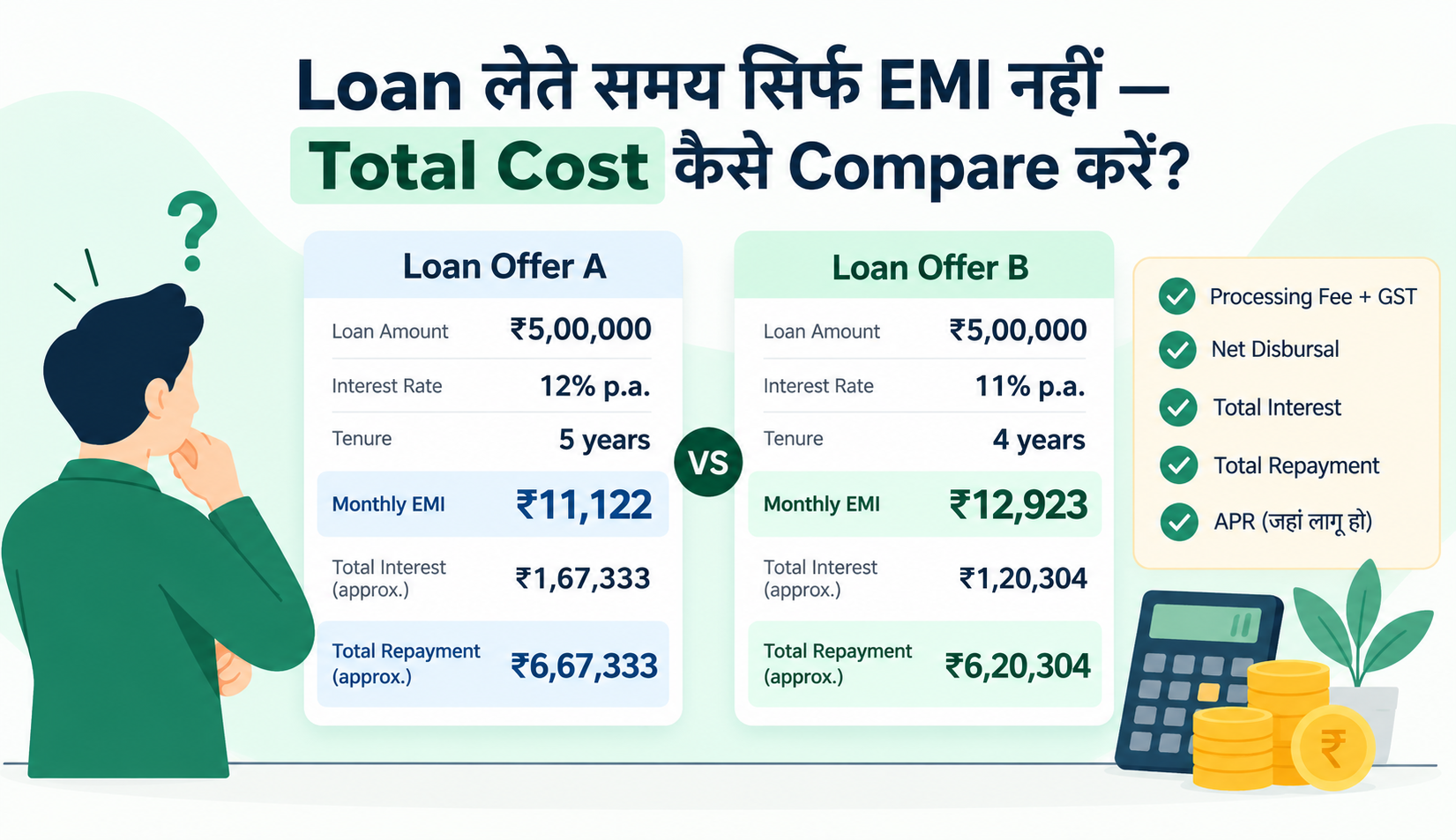
Particular | Lender A | Lender B |
|---|---|---|
Loan Amount | ₹5,00,000 | ₹5,00,000 |
Interest Rate | 12% p.a. | 11% p.a. |
Tenure | 5 साल | 4 साल |
Monthly EMI (लगभग) | ₹11,122 | ₹12,923 |
Total Interest (लगभग) | ₹1,67,333 | ₹1,20,304 |
Total EMI Repayment (लगभग) | ₹6,67,333 | ₹6,20,304 |
यह illustration reducing-balance EMI, monthly interest calculation और नियमित समय पर भुगतान मानकर तैयार किया गया है। Amounts rounded हैं।
अब देखिए।
Lender A की EMI लगभग ₹1,801 कम है।
लेकिन पूरे Loan में उसका estimated interest लगभग ₹47,000 ज्यादा है।
क्यों?
क्योंकि Lender A का Loan पांच साल चलता है, जबकि Lender B का Loan चार साल में पूरा हो जाता है।
इस example में Lender B की monthly EMI ज्यादा है, लेकिन कुल interest कम है।
इसका मतलब यह नहीं कि हर borrower को Lender B चुनना चाहिए।
अगर ₹12,923 EMI आपके monthly budget पर ज्यादा pressure डालती है, तो उस बात को भी समझना जरूरी है।
पहला lesson: कम EMI और कम Total Cost एक ही चीज नहीं हैं।
2. EMI और Total Loan Cost में क्या फर्क है?
EMI यानी Equated Monthly Instalment।
यह वह नियमित monthly payment है जिससे Loan का principal और interest repay किया जाता है।
लेकिन EMI पूरी Loan Cost नहीं बताती।
Loan लेने में कई financial components हो सकते हैं:
Principal Amount
Interest
Processing Fee
Applicable GST या अन्य taxes on charges
Documentation या अन्य disclosed upfront charges
Applicable insurance premium, यदि कोई हो
कुछ परिस्थितियों में prepayment या foreclosure charges
सभी charges हर Loan पर लागू हों, यह जरूरी नहीं है।
इसीलिए Loan compare करते समय दो अलग numbers समझें।
Total EMI Repayment
पूरी tenure में scheduled EMIs के जरिए चुकाई जाने वाली estimated रकम।
Overall Borrowing Cost
Principal के अलावा Loan प्राप्त करने और repay करने से जुड़े interest तथा applicable charges का कुल आर्थिक असर।
उदाहरण के लिए, ₹5 लाख Loan पर ₹6.67 लाख की total EMI repayment होने का मतलब लगभग ₹1.67 लाख interest है।
लेकिन अगर ₹10,000 processing fee और applicable tax अलग से देना है, तो आपकी borrowing cost interest से ज्यादा होगी।
3. Processing Fee और GST से Loan कितना महंगा हो सकता है?
मान लीजिए:
Loan Amount: ₹5,00,000
Interest Rate: 12% p.a.
Tenure: 5 साल
Processing Fee: 2%
अब processing fee calculate करें।
₹5,00,000 × 2% = ₹10,000
अगर इस processing fee पर 18% GST लागू है:
GST = ₹1,800
Total Processing Fee + GST = ₹11,800
इसका मतलब Loan लेने से पहले या disbursal के समय ₹11,800 का additional cost हो सकता है।
यह amount lender के अनुसार अलग से collect किया जा सकता है या sanctioned amount से deduct हो सकता है।
दोनों cases में borrower को actual cash flow समझना चाहिए।
ध्यान दें: 18% GST यहाँ applicable taxable processing fee का illustrative assumption है। सभी charges पर एक ही tax treatment assume नहीं करना चाहिए।
4. ₹5 लाख Sanction हुए, लेकिन हाथ में कम पैसा क्यों आया?
यह सवाल कई borrowers को disbursal के समय परेशान करता है।
मान लीजिए lender ने:
Sanctioned Loan Amount = ₹5,00,000
लेकिन processing fee और GST Loan amount से deduct कर लिए।
Particular | Amount |
|---|---|
Sanctioned Loan | ₹5,00,000 |
Processing Fee | ₹10,000 |
GST on Processing Fee | ₹1,800 |
Total Upfront Deduction | ₹11,800 |
Net Disbursal | ₹4,88,200 |
आपके bank account में ₹4,88,200 आए।
लेकिन Loan की scheduled EMI अभी भी ₹5 लाख principal के आधार पर calculate हो सकती है।
यही वजह है कि Sanctioned Amount और Net Disbursal दोनों check करने चाहिए।
अगर आपको किसी expense के लिए पूरे ₹5 लाख चाहिए, तो ₹4,88,200 मिलने से ₹11,800 का gap रह जाएगा।
यह केवल cost का मामला नहीं, आपके actual funding requirement का भी मामला है।
5. अब दो Loan Offers को Charges सहित Compare करें
मान लीजिए दोनों lenders ₹5 लाख का Loan दे रहे हैं।
इस बार tenure और interest rate एक जैसे हैं, लेकिन processing charges अलग हैं।
Particular | Lender A | Lender B |
|---|---|---|
Loan Amount | ₹5,00,000 | ₹5,00,000 |
Interest Rate | 12% | 12% |
Tenure | 5 साल | 5 साल |
EMI (लगभग) | ₹11,122 | ₹11,122 |
Total Interest (लगभग) | ₹1,67,333 | ₹1,67,333 |
Processing Fee | ₹10,000 | ₹2,500 |
GST on Fee (18% assumed) | ₹1,800 | ₹450 |
Total Fee + GST | ₹11,800 | ₹2,950 |
Net Disbursal, if deducted | ₹4,88,200 | ₹4,97,050 |
Interest + Fee + GST | ₹1,79,133 | ₹1,70,283 |
Figures are approximate and exclude other possible charges. The fee amounts are assumed to be deducted from disbursal for the net-disbursal comparison.
अब दोनों Loans की EMI एक जैसी है।
लेकिन Lender B में upfront charges कम होने के कारण इस example में estimated borrowing cost लगभग ₹8,850 कम है।
यानी Same EMI होने का मतलब Same Loan Cost नहीं है।
और इसी तरह सिर्फ कम interest rate होने से भी कोई Loan automatically सस्ता नहीं हो जाता—बाकी terms और charges भी मायने रखते हैं।
6. Total Repayment और Total Borrowing Cost कैसे Calculate करें?
एक simple framework याद रखें।
Step 1 — Total EMI Repayment
Monthly EMI × Number of EMIs
Step 2 — Total Interest
Total EMI Repayment − Original Loan Principal
Step 3 — Estimated Borrowing Cost
Total Interest + Applicable Upfront Charges + Other Applicable Costs
Step 4 — Net Disbursal
Sanctioned Amount − Charges Deducted at Disbursal
अगर charges अलग से pay किए गए हैं, तो net disbursal और initial cash outflow को उसी हिसाब से देखें।
ध्यान रहे, यह framework एक सामान्य fixed-schedule comparison है। Floating-rate changes, irregular repayments, fees financed into the principal, insurance premiums या prepayments होने पर actual calculation बदल सकती है।
7. APR क्या है और यह Interest Rate से अलग क्यों हो सकता है?
Loan advertisements में अक्सर interest rate prominently दिखाई जाती है।
लेकिन केवल advertised interest rate देखकर borrowing cost पूरी तरह समझ नहीं आती।
APR यानी Annual Percentage Rate, borrowing cost को annualised रूप में समझने का एक measure है।
Applicable regulatory methodology के अनुसार इसमें interest के साथ कुछ relevant charges भी शामिल किए जा सकते हैं।
मान लीजिए दो Loans की nominal interest rate 12% है।
लेकिन एक में processing charges ज्यादा हैं और दूसरे में कम।
तो दोनों की APR अलग हो सकती है।
इसलिए Loan compare करते समय जहाँ applicable हो, lender की Key Facts Statement (KFS) में disclosed APR देखें।
एक जरूरी बात:
12% nominal interest rate को automatically 12% APR मत मानिए।
और केवल interest + fee जोड़कर उसे APR label भी नहीं करना चाहिए। APR की अपनी annualised cash-flow calculation होती है।
8. अपनी EMI और Loan Cost खुद Compare करें
अब तक आपने देखा कि interest rate, tenure और charges अलग-अलग तरीके से Loan Cost बदल सकते हैं।
अब अपने numbers डालकर देखें।
Suggested example:
Loan Amount: ₹5,00,000
Interest Rate: 12%
Tenure: 5 Years
पहले EMI और Total Interest देखें।
फिर Compare Mode में 4 साल और 5 साल की tenure compare करें।
अगर Loan Charges option उपलब्ध है, तो processing fee और GST का अलग scenario भी देखें।
Calculator आपको यह समझने में मदद करेगा कि:
EMI कितनी बदल सकती है?
Total interest कितना बदल सकता है?
Charges जोड़ने पर borrowing cost में कितना फर्क आता है?
Net disbursal कितना हो सकता है?
Calculator educational estimate देता है। Final Loan offer, KFS और lender की actual terms से numbers verify करें।
9. Loan Tenure बढ़ाकर EMI कम करना सही है?
मान लीजिए ₹12,923 EMI आपके budget में मुश्किल है।
लेकिन ₹11,122 EMI comfortable लगती है।
ऐसे में लंबी tenure monthly cash flow को आसान बना सकती है।
लेकिन उसी Loan को लंबे समय तक चलाने से total interest बढ़ सकता है।
इसलिए decision में दोनों बातें साथ देखें।
Monthly Affordability: हर महीने EMI comfortably manage होगी या नहीं?
Long-term Cost: पूरी tenure में कितना extra interest देना पड़ सकता है?
कभी-कभी कम EMI monthly budget के लिए जरूरी हो सकती है।
लेकिन इसका cost समझकर decision लेना ज्यादा useful है।
10. Flat Rate और Reducing Rate को Directly Compare न करें
यह एक और common mistake है।
मान लीजिए:
Lender A कहता है: 10% Flat Interest
Lender B कहता है: 12% Reducing Interest
पहली नजर में 10% कम लगता है।
लेकिन flat-rate Loan में interest calculation का आधार reducing-balance Loan से अलग हो सकता है।
इसलिए दोनों quoted rates को सीधे compare करके सस्ता Loan decide नहीं किया जा सकता।
बेहतर comparison के लिए देखें:
Actual EMI
Total Repayment
Applicable Charges
Net Disbursal
Disclosed APR, where applicable
अगर दोनों products की calculation method अलग है, तो same loan amount और same tenure के लिए repayment schedule और effective cost समझना जरूरी है।
11. Insurance और दूसरे Add-on Charges भी Check करें
कुछ Loan offers में insurance या दूसरे optional products भी सामने आ सकते हैं।
उदाहरण:
Loan Amount = ₹5,00,000
Insurance Premium = ₹8,000
अब सवाल है:
Insurance optional है या किसी specific arrangement में required है?
Premium upfront देना है या Loan में finance होगा?
अगर Loan में finance होगा, तो उस premium पर भी interest लगेगा?
Cover क्या है, exclusions क्या हैं?
क्या borrower को स्पष्ट consent और policy details मिली हैं?
सिर्फ “EMI में थोड़ा सा फर्क पड़ेगा” सुनकर add-on cost ignore नहीं करनी चाहिए।
यहाँ उद्देश्य insurance को अच्छा या बुरा बताना नहीं है।
उद्देश्य है कि borrower को product, consent और total cost स्पष्ट हो।
12. Loan Offer Accept करने से पहले 7 चीजें Compare करें
जब आपके पास दो या अधिक Loan offers हों, तो एक simple comparison sheet बनाएं।
1. Loan Amount
कितना Loan sanctioned हो रहा है?
2. Net Disbursal
Charges deduct होने के बाद कितना पैसा मिलेगा?
3. Interest Rate और Calculation Method
Fixed/Floating, Flat/Reducing और applicable reset terms क्या हैं?
4. EMI
हर महीने कितनी payment करनी होगी?
5. Tenure
कितने महीनों तक EMI देनी होगी?
6. Total Repayment और APR
पूरे Loan का financial impact क्या है?
7. Applicable Charges और Conditions
Processing fee, taxes, add-ons, late-payment terms और applicable prepayment conditions क्या हैं?
इन सात points से comparison सिर्फ advertised EMI तक सीमित नहीं रहेगा।
13. Loan लेने से पहले KFS क्यों पढ़ें?
KFS यानी Key Facts Statement।
RBI के applicable KFS framework के तहत covered loans में borrowers को standardized format में key loan information दी जाती है।
इसका उद्देश्य है कि borrower important terms और borrowing cost को आसानी से समझ सके।
Loan offer accept करने से पहले applicable KFS में विशेष रूप से देखें:
APR
Repayment Schedule
Processing Charges
Other Disclosed Charges
Loan Terms और Conditions
Applicable contingent charges
अगर advertisement और final loan documents के numbers में फर्क दिख रहा है, तो clarification मांगें।
Advertisement देखकर नहीं, final documented offer समझकर decision लें।
14. सबसे बड़ी गलती: EMI Affordable है, इसलिए Loan Affordable है
मान लीजिए आपकी monthly take-home income ₹50,000 है।
Existing EMI ₹15,000 है।
नए Loan की EMI ₹11,000 होगी।
तो total monthly EMIs लगभग ₹26,000 हो जाएंगी।
यह take-home income का लगभग 52% है।
लेकिन EMI का यह ratio आपके household expenses नहीं बताता।
आपको rent, school fees, groceries, insurance, medical expenses और emergency savings भी manage करनी हैं।
इसलिए EMI mathematically payable होने का मतलब यह नहीं कि वह आपके लिए comfortably affordable भी है।
Loan Cost और Personal Affordability—दोनों अलग checks हैं।
अगर आप income के मुकाबले existing debt obligations समझना चाहते हैं, तो FinMitraPro का FOIR article और calculator भी उपयोगी हो सकता है।
15. Loan Compare करते समय इन Common Mistakes से बचें
Mistake 1: सिर्फ सबसे कम EMI देखना
कम EMI का कारण ज्यादा tenure भी हो सकती है।
Mistake 2: Processing Fee ignore करना
Same interest rate वाले Loans की overall cost अलग हो सकती है।
Mistake 3: Sanctioned Amount को Received Amount समझना
Upfront deductions के कारण net disbursal कम हो सकता है।
Mistake 4: Flat और Reducing Rate को सीधे compare करना
दोनों की calculation method अलग हो सकती है।
Mistake 5: Expected Investment Return से Loan Cost को सीधे बराबर मान लेना
Investment return में risk, tax और uncertainty हो सकती है।
Mistake 6: KFS और repayment schedule न पढ़ना
Final documented terms ही meaningful comparison का आधार हैं।
FinMitraPro Note
Loan लेते समय EMI को शुरुआत मानिए, पूरा जवाब नहीं।
दो Loan offers compare करते समय हमेशा चार सवाल पूछें:
कितना पैसा मिलेगा?
हर महीने कितना देना होगा?
कितने समय तक देना होगा?
कुल कितनी borrowing cost आएगी?
इन चार सवालों के जवाब मिलने के बाद Loan offers का अंतर ज्यादा स्पष्ट हो जाता है।
📖 Summary
कम EMI वाला Loan हमेशा कम cost वाला नहीं होता।
लंबी tenure monthly EMI कम कर सकती है, लेकिन total interest बढ़ सकता है।
Processing fee, applicable GST और दूसरे charges borrowing cost बढ़ा सकते हैं।
Sanctioned Loan Amount और Net Disbursal अलग हो सकते हैं।
Same EMI वाले दो Loans की overall cost भी अलग हो सकती है।
Flat और Reducing interest rates को सीधे compare नहीं करना चाहिए।
जहाँ applicable हो, KFS में APR, repayment schedule और charges देखें।
Loan compare करते समय total cost के साथ monthly affordability भी समझें।