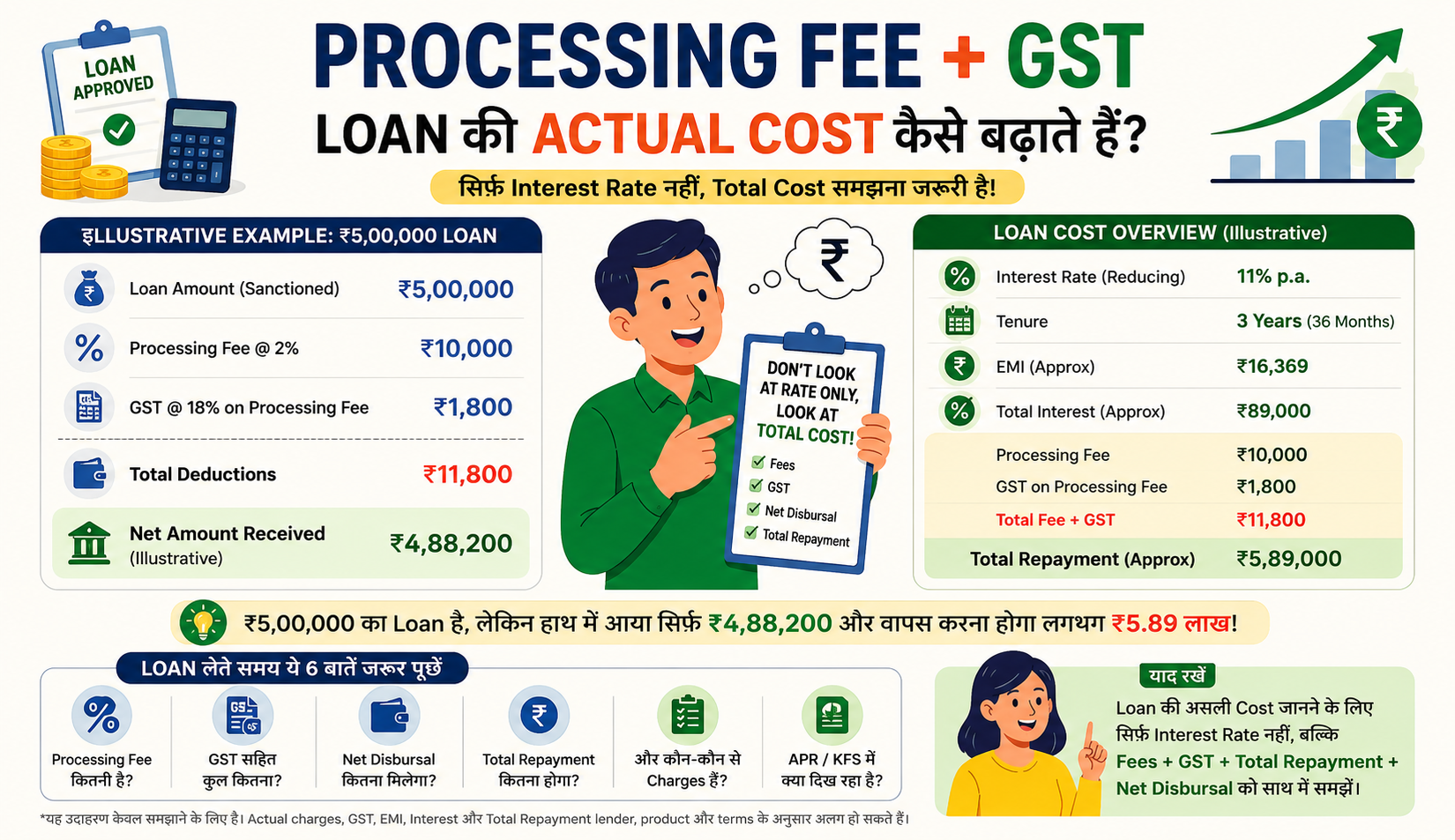
Loan लेते समय हमारा ध्यान अक्सर दो numbers पर रहता है:
Interest Rate कितना है?
और
EMI कितनी आएगी?
लेकिन loan की cost सिर्फ interest से तय नहीं होती।
मान लीजिए आपको बताया गया:
“₹5 लाख का Personal Loan 11% पर approved है।”
Offer ठीक लग रहा है।
फिर पता चलता है:
Processing Fee: 2%
GST on Processing Fee: 18%
अब सवाल है:
क्या आपको पूरे ₹5 लाख मिलेंगे?
जरूरी नहीं।
अगर fee loan amount से deduct होती है, तो आपके account में कम पैसा आ सकता है—जबकि repayment obligation sanctioned/disbursed loan structure के अनुसार ₹5 लाख के आसपास ही बनी रह सकती है।
यहीं Loan Amount, Net Disbursal और Actual Borrowing Cost के बीच फर्क शुरू होता है।
चलिए इसे numbers के साथ समझते हैं।
Processing Fee क्या होती है?
Processing Fee वह charge है जो lender loan application को process करने, evaluate करने या disburse करने के लिए ले सकता है।
यह अलग-अलग तरीके से quote हो सकती है:
Loan amount का percentage
Fixed amount
Minimum/maximum fee
Product-specific charge
उदाहरण:
Loan Amount:
Processing Fee:
तो fee होगी:
₹5,00,000 × 2% = ₹10,000
लेकिन कहानी यहां खत्म नहीं होती।
Processing Fee पर GST भी लग सकता है
अगर applicable processing fee ₹10,000 है और उस service charge पर 18% GST applicable है, तो:
GST = ₹10,000 × 18%
= ₹1,800
अब total upfront processing-related charge:
₹10,000 + ₹1,800
यानी जिस fee को आपने सिर्फ “2%” समझा था, उसका cash impact इस example में ₹11,800 है।
GST loan principal पर नहीं, applicable fee/service charge पर लगने की बात यहां illustrate की जा रही है। Actual tax treatment और charges lender documents में verify करें।
₹5 लाख Loan — लेकिन हाथ में कितना आया?
मान लीजिए lender processing fee और GST disbursal से deduct करता है।
Sanctioned/Financed Amount
₹5,00,000
Processing Fee
₹10,000
GST
₹1,800
Total Deduction
₹11,800
तो illustrative Net Disbursal:
हो सकता है।
यानी:
आपने ₹5 लाख का loan लिया, लेकिन आपके bank account में ₹4,88,200 आए।
अब सबसे important बात:
अगर EMI ₹5 lakh principal structure पर calculate हो रही है, तो repayment calculation ₹4,88,200 पर automatically नहीं होगी।
यही वजह है कि processing fee को सिर्फ “छोटी सी fee” समझकर ignore नहीं करना चाहिए।
Loan Amount ≠ Net Disbursal
यह distinction loan समझने के लिए बहुत important है।
Loan Amount
वह amount जिस पर loan structure/repayment obligation based हो सकती है।
Net Disbursal
Applicable upfront deductions के बाद वास्तव में आपके हाथ में आने वाला पैसा।
दोनों numbers अलग हो सकते हैं।
उदाहरण:
Particular | Amount |
|---|---|
Loan Amount | ₹5,00,000 |
Processing Fee @ 2% | ₹10,000 |
GST @ 18% on Fee | ₹1,800 |
Total Upfront Deduction | ₹11,800 |
Illustrative Net Disbursal | ₹4,88,200 |
अब loan को सिर्फ:
“₹5 lakh @ 11%”
कहना पूरी picture नहीं बताता।
Interest जोड़ने के बाद फर्क और साफ दिखता है
अब मान लीजिए:
Loan Amount: ₹5,00,000
Interest Rate: 11% p.a.
Tenure: 3 Years
Method: Reducing Balance
Approximate EMI:
36 months में approximate total repayment:
Approximate interest:
अब processing fee + GST भी जोड़ें:
तो borrowing से जुड़ी overall cost सिर्फ interest तक सीमित नहीं है।
Illustratively:
Interest + Processing Fee + GST
लगभग:
के आसपास हो सकता है।
यह exact APR calculation नहीं है—सिर्फ यह दिखाने के लिए है कि fees को ignore करने पर loan की cost अधूरी दिखाई देती है।
Loan की Actual Cost देखें
Processing Fee EMI में शामिल होती है?
हर loan में जरूरी नहीं।
इसका treatment lender और product के अनुसार अलग हो सकता है।
कुछ cases में fee:
Disbursal से deduct हो सकती है।
कुछ structures में:
separately collect की जा सकती है।
और कुछ cases में applicable charges loan structure में differently handled हो सकते हैं।
इसलिए सिर्फ यह मत पूछिए:
“Processing Fee कितनी है?”
यह भी पूछिए:
“यह fee कब और कैसे charge होगी?”
“Processing Fee सिर्फ 1% है” — क्या सच में छोटी है?
Percentage छोटा दिख सकता है।
लेकिन rupee amount देखें।
1% fee = ₹3,000
1% fee = ₹10,000
1% fee = ₹20,000
और applicable GST इसके ऊपर अलग हो सकता है।
इसलिए percentage को हमेशा rupee amount में convert करें।
1% vs 2% Processing Fee कितना फर्क डाल सकती है?
मान लीजिए loan:
Lender A
Processing Fee = 1%
Fee:
₹10,000
18% GST illustration:
₹1,800
Total:
Lender B
Processing Fee = 2%
Fee:
₹20,000
GST:
₹3,600
Total:
Difference:
अब अगर दोनों lenders की interest rate लगभग समान है, तो processing fee meaningful comparison factor बन जाती है।
लेकिन सिर्फ Processing Fee देखकर भी Loan Decide न करें
यह दूसरी तरफ की गलती होगी।
मान लीजिए:
Loan A
Interest: 10.5%
Processing Fee: 2%
Loan B
Interest: 11.5%
Processing Fee: 0%
अब यह automatically नहीं कहा जा सकता कि zero processing fee वाला loan cheaper है।
क्योंकि interest पूरे tenure में कितना फर्क डालता है, वह भी calculate करना होगा।
इसलिए सही comparison है:
Interest + Fees + Other Applicable Charges + Repayment Structure
“Zero Processing Fee” का मतलब Zero Loan Cost नहीं है
Marketing में आपको offer मिल सकता है:
ZERO PROCESSING FEE 🎉
अच्छा offer हो सकता है।
लेकिन इसके बाद भी check करें:
Interest Rate
Total Interest
Documentation/other applicable charges
Insurance/add-ons
Prepayment/foreclosure terms
Late-payment charges
Net Disbursal
Total Amount Payable
एक fee zero होने का मतलब पूरा loan free या cheapest नहीं हो जाता।
GST Interest पर भी लगता है?
यहां distinction जरूरी है।
Normal loan interest और lender द्वारा charged taxable services/fees का treatment एक जैसा मान लेना सही नहीं है।
Processing fee जैसे applicable service charges पर GST हो सकता है।
लेकिन आपको हर charge पर खुद assumption नहीं करनी चाहिए।
Lender के:
Key Fact Statement (KFS)
Sanction Letter
Schedule of Charges
में actual applicable taxes और fees देखें।
₹10,000 Fee वास्तव में ₹11,800 क्यों बनी?
यही simple mental calculation याद रख सकते हैं।
अगर:
Processing Fee = ₹10,000
और उस fee पर:
GST = 18%
तो:
GST = ₹1,800
Total =
इसलिए जब lender कहे:
“Processing सिर्फ ₹10,000 है”
तो पूछिए:
“GST सहित total कितना?”
यह ज्यादा useful सवाल है।
Percentage Fee किस Amount पर Calculate हो रही है?
यह भी पूछना जरूरी है।
उदाहरण:
“Processing Fee 2%”
लेकिन:
2% किसका?
Sanctioned amount?
Disbursed amount?
Approved loan amount?
कोई minimum/maximum cap?
Terms lender-specific हो सकती हैं।
इसलिए advertisement की percentage से ज्यादा important है:
Final Rupee Amount
Minimum Processing Fee भी हो सकती है
मान लीजिए lender कहता है:
Processing Fee: 1%
लेकिन terms में लिखा है:
Minimum ₹3,000
अगर आपका loan ₹2 lakh है:
1% = ₹2,000
लेकिन minimum condition के कारण fee ₹3,000 हो सकती है।
Applicable GST उसके ऊपर अलग हो सकता है।
इसलिए percentage देखकर final charge assume न करें।
Processing Fee Refundable होती है?
जरूरी नहीं।
Application fee, login fee, processing fee और other charges के refund rules अलग-अलग हो सकते हैं।
कुछ charges non-refundable हो सकते हैं—even if loan बाद में नहीं लिया गया या application process आगे नहीं बढ़ी।
इसलिए payment से पहले check करें:
यह charge refundable है या non-refundable?
और किन conditions में?
Loan जल्दी बंद करने पर Processing Fee वापस मिलेगी?
Generally upfront processing fee को सिर्फ इसलिए वापस मिलना assume नहीं करना चाहिए क्योंकि आपने loan जल्दी prepay/foreclose कर दिया।
लेकिन exact treatment lender terms पर depend करेगा।
इसलिए अगर आप short-term borrowing plan कर रहे हैं, upfront fees proportionately और important हो जाती हैं।
Short Tenure Loan में Processing Fee का Impact ज्यादा क्यों महसूस हो सकता है?
मान लीजिए दो loans हैं:
Loan A
₹5 lakh
Tenure: 1 Year
Loan B
₹5 lakh
Tenure: 5 Years
दोनों में upfront fee:
₹11,800
हो।
Rupee fee दोनों में समान हो सकती है।
लेकिन एक साल के loan में यह upfront cost बहुत कम समय के लिए borrowed money पर लग रही है।
इसीलिए short-duration loans में upfront fees को ignore करना खास तौर पर misleading हो सकता है।
Loan Transfer में भी Processing Fee देखें
मान लीजिए existing loan:
और नया lender offer करता है:
Rate कम है।
अच्छा लग रहा है।
लेकिन transfer में हो सकते हैं:
Processing Fee
GST
Documentation charges
Legal/valuation charges, where applicable
Other transfer-related costs
अगर remaining loan छोटा है या tenure कम बची है, तो switching cost expected interest saving का हिस्सा खा सकती है।
इसलिए loan transfer का सवाल सिर्फ:
12% से 10.5%
नहीं है।
सवाल है:
Charges के बाद actual saving कितनी बचती है?
Processing Fee को Loan में Add कर दिया जाए तो?
कुछ financing structures में charges upfront pay करने के बजाय financed amount का हिस्सा बन सकते हैं।
अगर कोई fee भी finance हो रही है, तो यह check करें कि उस financed amount पर आगे interest कैसे apply होगा।
क्योंकि ऐसी स्थिति में:
आप fee सिर्फ pay नहीं कर रहे—उस financed fee पर borrowing cost भी हो सकती है।
Actual treatment lender documents से verify करें।
APR यहां Useful क्यों हो सकती है?
यही कारण है कि सिर्फ headline interest rate पूरी borrowing cost नहीं बताती।
APR यानी Annual Percentage Rate जैसे standardized disclosure loan की broader annualized cost समझने में मदद कर सकते हैं, क्योंकि applicable framework के अनुसार interest के साथ कुछ charges भी consideration में आ सकते हैं।
लेकिन FinMitraPro calculator को सिर्फ:
Interest + Processing Fee
जोड़कर उसे APR label नहीं करना चाहिए।
APR के लिए applicable methodology और relevant cash flows properly calculate करना जरूरी है।
जहां lender APR disclose करता है, उसे KFS में जरूर देखें।
Key Fact Statement क्यों Important है?
Loan advertisement आपको दिखा सकती है:
10.99% Interest
लेकिन KFS आपको broader picture समझने में मदद कर सकता है।
Loan लेने से पहले कम-से-कम देखें:
Loan Amount
Interest Rate / Rate Type
APR, where applicable
EMI
Tenure
Processing Fee
Applicable Taxes
Other Charges
Total Repayment / repayment schedule
Prepayment/Foreclosure Terms
यानी marketing number से आगे बढ़कर actual loan terms देखें।
दो Loan Offers कैसे Compare करें?
एक simple table बनाइए:
Check | Loan A | Loan B |
|---|---|---|
Loan Amount | ₹5,00,000 | ₹5,00,000 |
Interest Rate | ___% | ___% |
Rate Type | ___ | ___ |
Tenure | ___ | ___ |
EMI | ₹___ | ₹___ |
Total Interest | ₹___ | ₹___ |
Processing Fee | ₹___ | ₹___ |
GST/Applicable Tax | ₹___ | ₹___ |
Other Charges | ₹___ | ₹___ |
Net Disbursal | ₹___ | ₹___ |
Total Repayment | ₹___ | ₹___ |
APR | ___% | ___% |
अब comparison सिर्फ:
नहीं रहेगा।
आप actual economics देख रहे होंगे।
सबसे Useful Number कौन-सा है?
इस article से अगर सिर्फ एक habit बनानी हो, तो यह बनाइए:
Loan लेते समय तीन numbers अलग-अलग लिखें:
1. कितना Loan लिया?
₹________
2. हाथ में वास्तव में कितना मिला?
₹________
3. कुल कितना वापस देना है?
₹________
इन तीन numbers के बीच का फर्क आपको loan के बारे में headline rate से कहीं ज्यादा बता सकता है।
एक Practical Example फिर से
हमारे illustration में:
Loan Amount
₹5,00,000
Processing Fee
₹10,000
GST on Fee
₹1,800
Net Amount Received
₹4,88,200
अब अगर कोई कहता है:
“आपको ₹5 लाख का loan मिला।”
तो technically loan structure ₹5 lakh का हो सकता है।
लेकिन आपकी practical cash-flow reality है:
आपके हाथ में ₹4,88,200 आए।
इसीलिए loan cost समझते समय Net Disbursal बहुत useful number है।
Loan लेने से पहले ये 8 सवाल पूछें
Processing Fee percentage नहीं—₹ में कितनी है?
उस पर GST/applicable tax कितना है?
कोई minimum/maximum processing fee है?
Fee upfront देनी है या disbursal से deduct होगी?
Net Disbursal कितना मिलेगा?
Other mandatory charges/add-ons क्या हैं?
Total Amount Payable कितना है?
KFS में APR और applicable charges क्या दिख रहे हैं?
इन answers के बाद loan comparison काफी clearer हो जाता है।
📖 Summary
Loan की cost सिर्फ interest rate से तय नहीं होती।
Processing Fee percentage को हमेशा actual ₹ amount में convert करके देखें।
Applicable GST processing fee/service charge की cost को और बढ़ा सकता है।
₹5 lakh loan पर 2% processing fee ₹10,000 है; 18% GST illustration में total processing-related charge ₹11,800 बनता है।
अगर यह amount disbursal से deduct हो, तो ₹5 lakh loan में illustrative net receipt ₹4,88,200 हो सकती है।
Loan Amount और Net Disbursal अलग हो सकते हैं।
Zero Processing Fee का मतलब automatically cheapest loan नहीं है।
दो loans compare करते समय EMI + Total Interest + Fees + Net Disbursal + Total Repayment + APR/KFS साथ देखें।