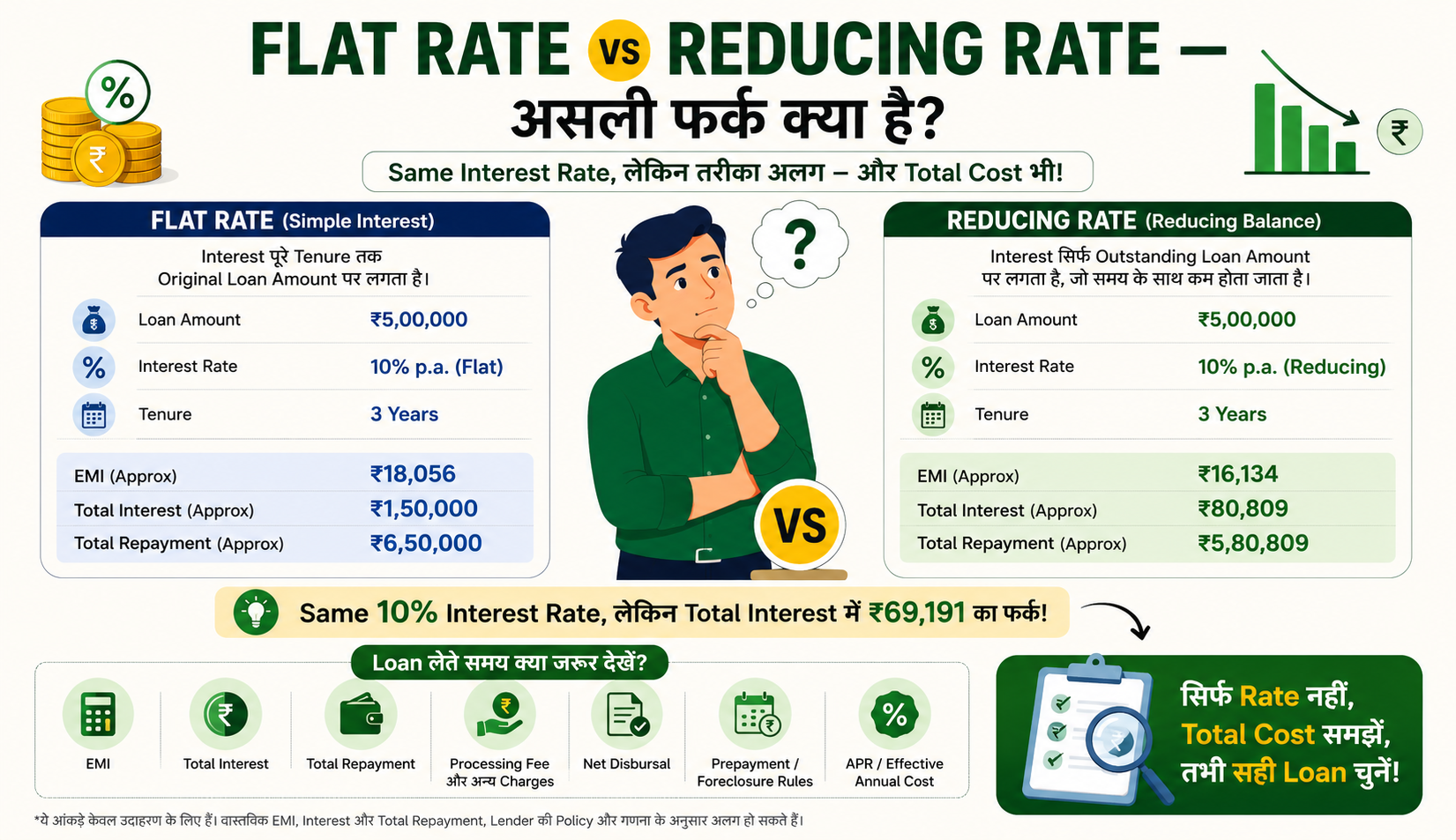
Loan लेते समय एक number बहुत prominently दिखाया जाता है:
Interest Rate: 10%
सुनने में simple लगता है।
लेकिन सिर्फ 10% जानना काफी नहीं है।
आपको एक और सवाल जरूर पूछना चाहिए:
10% Flat Rate है या 10% Reducing Balance Rate?
क्योंकि दोनों में interest calculate करने का तरीका अलग होता है।
और यही फर्क आपकी EMI और total repayment को काफी बदल सकता है।
चलिए इसे बिना complicated maths के आसान example से समझते हैं।
सबसे पहले — Flat Rate क्या होती है?
Flat Rate में interest आमतौर पर original loan amount पर पूरे tenure के लिए calculate किया जाता है।
मान लीजिए:
Loan Amount: ₹5,00,000
Interest Rate: 10% Flat
Tenure: 3 Years
Simplified interest:
₹5,00,000 × 10% × 3
= ₹1,50,000
तो total repayment लगभग:
और 36 months में approximate monthly instalment:
हो सकती है।
ध्यान दें:
Loan balance हर EMI के साथ कम हो रहा है,
लेकिन flat-rate calculation में interest का base शुरू के ₹5 lakh से जुड़ा रहता है।
यही इसकी खास बात है।
Reducing Rate क्या होती है?
Reducing Balance या Diminishing Balance method में interest outstanding principal पर calculate होता है।
यानी:
पहली EMI के बाद principal थोड़ा कम हुआ।
अगली बार interest पूरे original ₹5 lakh पर नहीं, बल्कि remaining outstanding amount पर calculate होता है।
फिर principal और कम होता है।
फिर interest calculation का base भी कम होता जाता है।
इसलिए इसे कहते हैं:
Reducing Balance
वही Loan — लेकिन 10% Reducing Rate
अब वही example लेते हैं:
Loan Amount: ₹5,00,000
Interest Rate: 10% p.a. Reducing
Tenure: 3 Years
Standard reducing-balance EMI calculation में approximate:
EMI: ₹16,134/month
Total Interest: ₹80,809
Total Repayment: ₹5,80,809
अब दोनों को side-by-side देखें।
10% Flat | 10% Reducing | |
|---|---|---|
Loan Amount | ₹5,00,000 | ₹5,00,000 |
Tenure | 3 Years | 3 Years |
Stated Rate | 10% | 10% |
Approx EMI | ₹18,056 | ₹16,134 |
Approx Total Interest | ₹1,50,000 | ₹80,809 |
Approx Total Repayment | ₹6,50,000 | ₹5,80,809 |
दोनों जगह headline number:
ही है।
लेकिन cost समान नहीं है।
यही सबसे important takeaway है:
10% Flat Rate ≠ 10% Reducing Rate
Numbers illustrative हैं। Actual lender EMI, rounding, fees और repayment methodology के अनुसार अलग हो सकती है।
ऐसा फर्क क्यों आता है?
इसे बहुत simple तरीके से समझें।
मान लीजिए आपने ₹5 lakh borrow किया।
कुछ EMIs देने के बाद outstanding loan रह गया:
Reducing-rate method में आगे का interest करीब उस remaining outstanding balance पर calculate होगा।
लेकिन flat-rate structure में original principal को interest calculation का आधार माना जा सकता है।
इसीलिए flat percentage देखने में कम लग सकती है, लेकिन effective borrowing cost अपेक्षा से ज्यादा हो सकती है।
एक आसान Example
मान लीजिए आपने अपने दोस्त से ₹1 lakh लिया।
पहले साल आपने ₹40,000 principal वापस कर दिया।
अब आपका बाकी debt:
अगर अगले साल interest ₹60,000 पर लगे,
तो conceptually यह reducing-balance thinking है।
लेकिन अगर interest calculation अभी भी ₹1 lakh original amount के आधार पर हो,
तो यह flat-rate concept के closer है।
यही basic difference है।
इसलिए सिर्फ Interest Rate Compare करना Misleading हो सकता है
मान लीजिए आपको दो offers मिलते हैं:
Offer A
8% Flat Rate
Offer B
11% Reducing Rate
पहली नजर में:
8% < 11%
तो Offer A cheaper लग सकता है।
लेकिन यह conclusion सिर्फ headline rates देखकर नहीं निकाला जा सकता।
क्योंकि दोनों rates अलग calculation methods use कर रही हैं।
आपको compare करना चाहिए:
EMI
Total Interest
Total Repayment
Fees
Net Disbursal
Effective borrowing cost
तभी meaningful comparison होगा।
Loan की Total Cost Compare करें
क्या Flat Rate हमेशा खराब होती है?
जरूरी नहीं कि किसी calculation method को अकेले देखकर loan को अच्छा या खराब कहा जाए।
असल decision में और भी factors होते हैं:
actual interest rate
processing fee
loan tenure
foreclosure charges
prepayment rules
insurance/add-on charges
net disbursal
repayment flexibility
अगर flat rate बहुत low है और दूसरे charges कम हैं, तो final economics अलग हो सकती है।
इसीलिए:
Rate Type समझना जरूरी है, लेकिन final decision Total Cost देखकर करें।
Flat Rate का सबसे बड़ा Confusion क्या है?
सबसे बड़ा confusion यह है कि लोग percentage को सीधे compare कर लेते हैं।
उदाहरण:
Loan A: 9% Flat
Loan B: 12% Reducing
फिर सोचते हैं:
“9% वाला सस्ता है।”
लेकिन यह जरूरी नहीं है।
क्योंकि दोनों percentages एक ही चीज represent नहीं कर रही हैं।
यह कुछ ऐसा है जैसे:
एक price per litre हो
और दूसरा price per kilogram।
Numbers compare करने से पहले measurement method same होना चाहिए।
क्या Flat Rate को Reducing Rate में Convert किया जा सकता है?
Exact conversion एक simple fixed multiplier से नहीं करनी चाहिए।
क्योंकि effective cost depend करती है:
tenure
EMI frequency
repayment structure
fees
cash flows
timing
कई जगह rough thumb rules मिल सकते हैं कि flat rate reducing rate के लगभग किसी multiple के बराबर होती है।
लेकिन ऐसे shortcuts हमेशा reliable नहीं होते।
Better approach:
Actual cash flows के आधार पर effective rate / APR-style cost compare करें।
Effective Interest Rate क्या है?
यह concept इस confusion को काफी हद तक solve करता है।
Headline rate आपको बताती है:
Advertised Rate
लेकिन effective rate यह समझने में मदद करती है कि actual repayment pattern के आधार पर borrowing की annualized cost क्या बन रही है।
इसीलिए अलग-अलग loan offers compare करते समय सिर्फ:
Interest Rate
की जगह:
APR / Effective Annual Cost
जैसे disclosures ज्यादा useful हो सकते हैं।
जहां lender APR (Annual Percentage Rate) या equivalent standardized cost disclose करे, उसे जरूर देखें।
APR क्यों useful है?
APR आमतौर पर loan की cost को broader तरीके से समझने में मदद करती है।
इसमें applicable framework के अनुसार interest के साथ कुछ other charges भी reflect हो सकते हैं।
इसलिए दो loans compare करते समय:
Headline Interest Rate
से ज्यादा useful हो सकता है:
APR + Total Repayment
हालांकि exact APR definition और included charges product/lender/regulatory disclosure के अनुसार verify करनी चाहिए।
Processing Fee भी Picture बदल सकती है
मान लीजिए Loan A कहता है:
10% Reducing
लेकिन:
Processing Fee = ₹15,000
Loan B:
10.5% Reducing
लेकिन:
Processing Fee = ₹2,000
अब सिर्फ interest rate देखकर Loan A automatically cheaper नहीं कहा जा सकता।
इसीलिए complete cost देखें।
Sanctioned Amount और Net Disbursal भी Check करें
मान लीजिए:
Approved Loan:
लेकिन deductions:
Processing Fee
GST
Insurance
Other applicable charges
के बाद bank account में मिले:
और repayment obligation ₹5 lakh structure के आधार पर हो।
तो आपके लिए important सवाल है:
मुझे वास्तव में कितना पैसा मिला और कुल कितना वापस देना है?
यही effective borrowing cost समझने का practical तरीका है।
Flat Rate किन Loans में दिख सकती है?
Flat-rate presentation कुछ consumer-finance, vehicle-finance, personal-loan या dealer-financing contexts में देखने को मिल सकती है।
लेकिन किसी specific lender/product के लिए assumption न करें।
Loan document में जरूर check करें:
Rate Method
Repayment Schedule
APR / Effective Rate
Total Amount Payable
Reducing Balance में EMI कैसे काम करती है?
Standard EMI structure में monthly payment fixed रह सकती है।
लेकिन उस EMI के अंदर principal और interest का हिस्सा बदलता रहता है।
Starting EMIs में:
Interest component ज्यादा
और
Principal component कम
हो सकता है।
समय के साथ:
Interest ↓
Principal ↑
होता जाता है।
इसे amortisation कहा जाता है।
उदाहरण से समझें
मान लीजिए EMI:
है।
यह जरूरी नहीं कि हर महीने:
₹8,067 principal
और
₹8,067 interest
हो।
ऐसा नहीं होता।
शुरुआती महीनों में interest का हिस्सा ज्यादा हो सकता है।
बाद में principal component बढ़ता है।
इसीलिए amortisation schedule देखना useful है।
Prepayment में Rate Type क्यों Matter करती है?
Reducing-balance loan में principal जल्दी कम करने से future interest calculation पर असर पड़ सकता है।
यही कारण है कि prepayment का benefit अक्सर outstanding principal और remaining tenure से जुड़ा होता है।
लेकिन actual benefit depend करेगा:
loan terms
prepayment charges
remaining tenure
current outstanding
interest methodology
पर।
Zero Cost EMI में भी यही सोच useful है
कभी-कभी offer लिखा होता है:
“0% EMI”
लेकिन फिर check करना चाहिए:
processing fee है?
cash discount sacrifice करना पड़ा?
GST/other charges हैं?
financed amount कितना है?
total payable कितना है?
नाम कुछ भी हो,
final सवाल हमेशा वही है:
मुझे मिला कितना और वापस देना कितना है?
Loan Offer Compare करने का सही तरीका
दो loan offers सामने हों तो यह table बनाइए:
Check | Loan A | Loan B |
|---|---|---|
Loan Amount | ₹___ | ₹___ |
Net Disbursal | ₹___ | ₹___ |
Rate | ___% | ___% |
Rate Type | Flat / Reducing | Flat / Reducing |
APR / Effective Cost | ___% | ___% |
EMI | ₹___ | ₹___ |
Tenure | ___ | ___ |
Processing Fee | ₹___ | ₹___ |
Total Interest | ₹___ | ₹___ |
Total Repayment | ₹___ | ₹___ |
अब comparison ज्यादा meaningful होगा।
सिर्फ “Rate कितनी है?” मत पूछिए
Loan लेते समय lender से ये सवाल पूछें:
1. Interest Flat है या Reducing?
2. EMI कितनी है?
3. Total Amount Payable कितना है?
4. Processing Fee और other charges क्या हैं?
5. Net Disbursal कितना मिलेगा?
6. APR / Effective Annual Cost क्या है?
7. Prepayment और Foreclosure rules क्या हैं?
अगर इन सवालों के answers clear हैं, तो loan समझना काफी आसान हो जाता है।
एक Sales Example
Dealer कहता है:
“Sir सिर्फ 7.5% पर finance हो जाएगा।”
यह सुनकर तुरंत अच्छा लग सकता है।
लेकिन अगला सवाल होना चाहिए:
7.5% Flat है या Reducing?
फिर:
Total repayment कितना होगा?
और:
Cash purchase के मुकाबले मुझे total कितना extra देना होगा?
यह तीन सवाल marketing rate को actual cost में translate कर देते हैं।
क्या Low Flat Rate देखकर Loan लेना गलत है?
नहीं।
गलती low flat rate देखना नहीं है।
गलती है:
उसे उसी percentage वाले reducing-rate loan के बराबर समझ लेना।
उदाहरण:
10% Flat
और
10% Reducing
को समान मानना गलत comparison है।
कौन-सा Number सबसे Useful है?
एक single perfect number नहीं है।
लेकिन loan compare करते समय यह combination काफी useful है:
EMI
आपकी monthly affordability बताती है।
Total Repayment
पूरे loan में कितना जाएगा बताता है।
APR / Effective Cost
Cost को standardized perspective में समझने में मदद कर सकती है।
इन तीनों को साथ देखें।
📖 Summary
Flat Rate और Reducing Rate अलग interest calculation methods हैं।
Flat Rate में interest original principal के आधार पर calculate किया जा सकता है।
Reducing Rate में interest outstanding principal पर calculate होता है।
इसलिए 10% Flat और 10% Reducing समान cost नहीं हैं।
₹5 lakh, 3-year illustration में 10% Flat का interest करीब ₹1.50 lakh जबकि 10% Reducing का करीब ₹80,809 हो सकता है।
सिर्फ headline rate compare न करें।
EMI, Total Repayment, Fees, Net Disbursal और APR/Effective Cost भी देखें।
Loan decision में rate type समझना जरूरी है, लेकिन final comparison total cost के आधार पर करें।