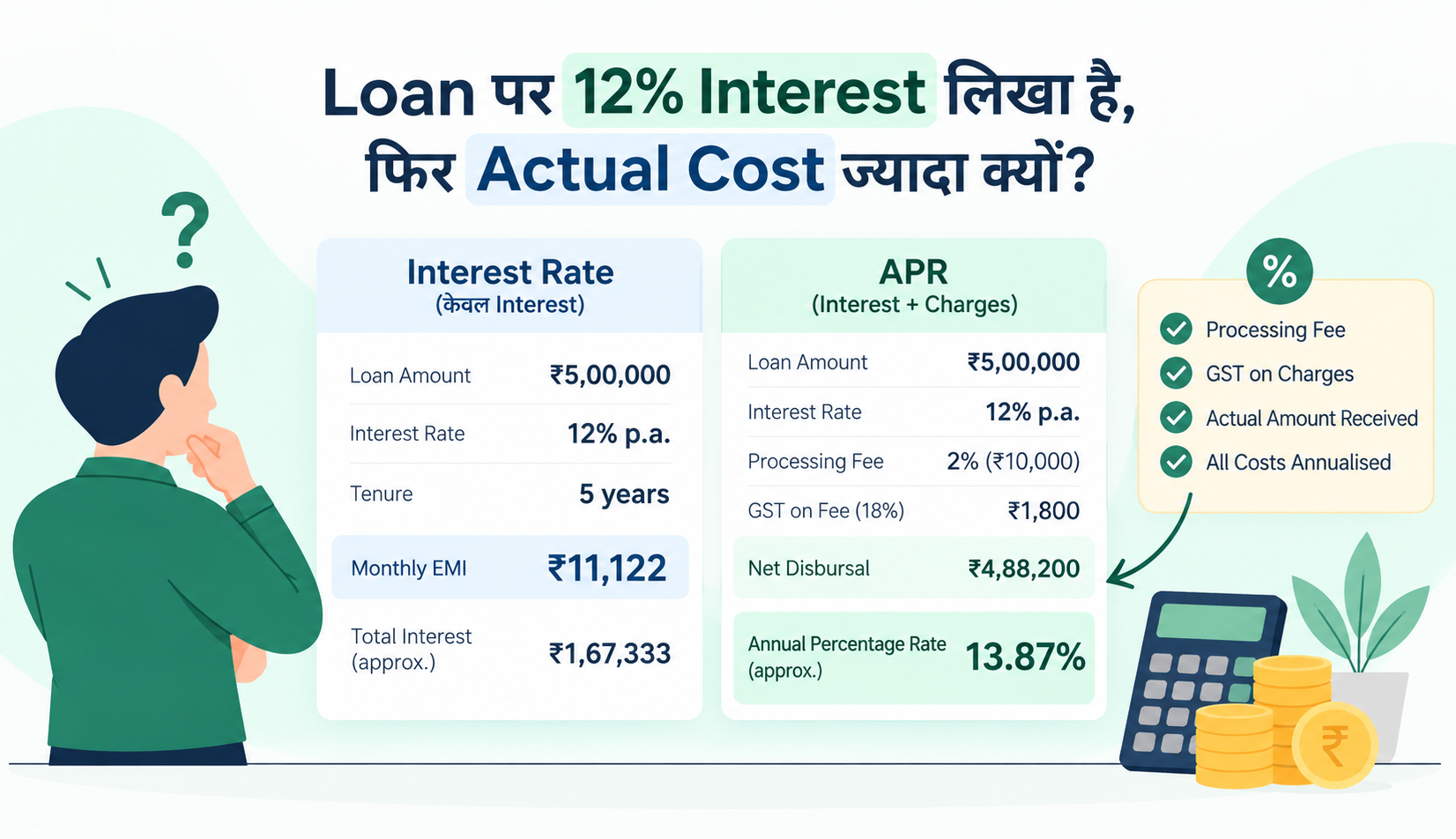
आपने ₹5 लाख के Personal Loan के लिए apply किया।
Lender ने बताया:
Interest Rate: 12% सालाना
आपने EMI check की। Monthly payment आपके budget में आ रही थी।
लेकिन Loan offer के documents में एक और number दिखाई दिया।
APR: लगभग 13.87%
आप सोचने लगे:
“जब Loan पर Interest Rate 12% है, तो APR लगभग 13.87% क्यों दिख रही है? क्या मुझे कुछ extra pay करना पड़ेगा?”
यही सवाल बहुत से borrowers के मन में आता है।
अक्सर हम Loan लेते समय interest rate और EMI पर ध्यान देते हैं, लेकिन processing fee, applicable taxes और दूसरे charges को उतनी गंभीरता से नहीं देखते।
APR यानी Annual Percentage Rate इन costs को समझने और Loan offers की तुलना करने में मदद करती है।
आइए एक आसान example से समझते हैं कि APR क्या है, यह interest rate से अलग क्यों हो सकती है और Loan लेने से पहले इसे कहाँ check करना चाहिए।
1. APR क्या है? आसान भाषा में समझें
APR का पूरा नाम है Annual Percentage Rate।
यह Loan की annualised borrowing cost को प्रतिशत में दिखाने का एक तरीका है।
सामान्य Loan Interest Rate मुख्य रूप से borrowed principal पर लगने वाले interest को बताती है।
लेकिन Loan लेने में interest के अलावा processing fee और दूसरे applicable charges भी हो सकते हैं।
APR ऐसे relevant costs को भी ध्यान में रखती है, जिनका inclusion लागू calculation framework के अनुसार आवश्यक है।
उदाहरण के लिए:
Loan Interest Rate: 12%
Processing Fee: 2%
Applicable GST on Processing Fee: 18%
Loan Tenure: 5 साल
ऐसे Loan की APR, nominal interest rate से ज्यादा हो सकती है।
याद रखें: APR कोई अलग से वसूला जाने वाला charge नहीं है। यह Loan की annualised cost को दर्शाने वाला percentage है।
2. Interest Rate और APR में क्या फर्क है?
मान लीजिए दो lenders एक ही interest rate पर Loan offer कर रहे हैं।
लेकिन उनके processing charges अलग हैं।
ऐसी स्थिति में nominal interest rate समान होने के बावजूद APR अलग हो सकती है।
Particular | Interest Rate | APR |
|---|---|---|
क्या बताती है? | Principal पर interest की rate | Annualised borrowing cost |
Processing Fee का असर | Rate में शामिल नहीं | Applicable methodology के अनुसार शामिल |
Other Charges | सीधे नहीं दिखते | Relevant charges शामिल हो सकते हैं |
Loan Comparison | अकेले पर्याप्त नहीं | Cost comparison में अधिक उपयोगी |
KFS में जानकारी | Interest Rate | Disclosed APR |
एक और महत्वपूर्ण बात:
APR और Total Interest Amount भी एक ही चीज नहीं हैं।
APR प्रतिशत में annualised cost बताती है।
जबकि Total Interest वह estimated रुपये की रकम है जो पूरी repayment schedule के दौरान interest के रूप में चुकाई जाती है।
3. ₹5 लाख Loan पर APR कैसे अलग हो सकती है?
अब एक practical example लेते हैं।
मान लीजिए आपने ₹5 लाख का Personal Loan लिया।
Loan Detail | Value |
|---|---|
Sanctioned Loan Amount | ₹5,00,000 |
Nominal Interest Rate | 12% p.a. |
Loan Tenure | 5 साल |
Monthly EMI | लगभग ₹11,122 |
Processing Fee | 2% |
Processing Fee Amount | ₹10,000 |
GST on Processing Fee (assumed 18%) | ₹1,800 |
Total Upfront Charges | ₹11,800 |
यहाँ मान लेते हैं कि Loan reducing-balance basis पर है, हर महीने के अंत में EMI देनी है और ₹11,800 के charges disbursal से deduct किए गए हैं।
अब दो अलग amounts सामने आते हैं।
Sanctioned Loan: ₹5,00,000
Net Disbursal: ₹4,88,200
यानी borrower को ₹4,88,200 मिले, लेकिन EMI ₹5 लाख के Loan principal पर calculate हुई।
इस illustrative cash-flow scenario में:
Nominal Interest Rate = 12% p.a.
Calculated Effective Annual APR ≈ 13.87%
तो APR ज्यादा क्यों आई?
क्योंकि annualised cost calculate करते समय borrower को मिलने वाली actual net amount और भविष्य की EMI payments, दोनों के timing को ध्यान में रखा गया।
यहाँ processing fee और GST ने effective borrowing cost बढ़ाई।
ध्यान दें: 13.87% इस example की calculated estimate है, किसी वास्तविक lender की quotation नहीं। Actual disclosed APR fee treatment, repayment dates, disbursement timing और applicable methodology के अनुसार अलग हो सकती है।
4. Processing Fee APR को कैसे प्रभावित करती है?
मान लीजिए दो lenders ₹5 लाख का Loan दे रहे हैं।
दोनों की interest rate 12% और tenure 5 साल है।
लेकिन processing fee अलग है।
Particular | Lender A | Lender B |
|---|---|---|
Loan Amount | ₹5,00,000 | ₹5,00,000 |
Interest Rate | 12% | 12% |
Tenure | 5 साल | 5 साल |
Monthly EMI (लगभग) | ₹11,122 | ₹11,122 |
Processing Fee | ₹10,000 | ₹2,500 |
GST on Fee (18% assumed) | ₹1,800 | ₹450 |
Total Upfront Charges | ₹11,800 | ₹2,950 |
Net Disbursal | ₹4,88,200 | ₹4,97,050 |
Illustrative Effective Annual APR | 13.87% | 12.97% |
यह comparison समान monthly repayment dates, fixed nominal rate और upfront deductions मानकर calculate किया गया है। दोनों APR values approximate हैं।
देखिए।
दोनों lenders की EMI समान है।
लेकिन Lender A में upfront charges ज्यादा हैं।
इसलिए उसकी APR भी ज्यादा निकलती है।
यही वजह है कि सिर्फ interest rate या EMI देखकर Loan की complete cost समझना मुश्किल हो सकता है।
5. APR कैसे Calculate होती है?
यहाँ एक बात समझना जरूरी है।
APR calculate करने का तरीका केवल इतना नहीं है:
Interest Rate + Processing Fee Percentage = APR
यह formula सही नहीं है।
मान लीजिए Loan पर 12% interest और 2% processing fee है।
इसका मतलब यह नहीं कि APR हमेशा 14% होगी।
क्यों?
क्योंकि processing fee एक बार लग सकती है, जबकि Loan कई महीनों या वर्षों में repay होता है।
APR calculation में cash flows और उनके timing को ध्यान में रखा जाता है।
सरल शब्दों में:
Step 1: Borrower को मिलने वाली net amount समझी जाती है।
Step 2: Scheduled repayments और relevant charges को identify किया जाता है।
Step 3: इन cash flows के timing के आधार पर periodic effective rate निकाली जाती है।
Step 4: Applicable annualisation methodology से APR calculate की जाती है।
हमारे example में ₹4,88,200 की initial net receipt और 60 monthly EMIs का cash-flow comparison किया गया है।
इससे लगभग 13.87% effective annualised rate निकलती है।
आपको Loan लेने के लिए खुद यह पूरी mathematical calculation करना जरूरी नहीं है।
लेकिन यह समझना उपयोगी है कि APR सिर्फ advertised interest rate में fee percentage जोड़ने से नहीं निकलती।
6. Loan Tenure बदलने पर APR पर क्या असर पड़ सकता है?
मान लीजिए ₹5 लाख के Loan पर processing fee ₹11,800 है।
अब वही Loan 2 साल या 5 साल के लिए लिया जाए।
Upfront fee दोनों में समान हो सकती है।
लेकिन उस fee का annualised impact अलग होगा।
क्योंकि 2 साल के Loan में वही fee कम समय के borrowing arrangement से जुड़ी है।
इसलिए कम tenure वाले Loan में एक ही upfront charge का APR पर proportionately ज्यादा असर हो सकता है।
इसका मतलब यह नहीं कि 2 साल का Loan हमेशा महंगा होगा।
हो सकता है उसकी total interest payment 5 साल के Loan से कम हो।
यहाँ तीन अलग measures समझना जरूरी है:
APR
Total Rupee Cost
Monthly EMI Affordability
APR अधिक होने का मतलब हमेशा ज्यादा total rupee interest नहीं होता।
इसलिए अलग tenure वाले Loans को compare करते समय APR के साथ total repayment और monthly budget भी देखें।
7. क्या कम APR वाला Loan हमेशा बेहतर होता है?
कम APR सामान्यतः कम annualised borrowing cost का संकेत दे सकती है, विशेषकर जब दोनों Loan offers की structure और terms comparable हों।
लेकिन decision केवल APR पर आधारित नहीं होना चाहिए।
मान लीजिए:
Loan A की APR कम है, लेकिन EMI आपके monthly budget के लिए काफी ज्यादा है।
Loan B की APR थोड़ी ज्यादा है, लेकिन repayment schedule आपके cash flow के लिए ज्यादा manageable है।
ऐसी स्थिति में केवल एक percentage देखकर निर्णय लेना अधूरा होगा।
Loan compare करते समय ये बातें भी समझें:
Monthly EMI: क्या आप समय पर payment कर पाएंगे?
Total Repayment: पूरे Loan में कितने रुपये चुकाने होंगे?
Tenure: Loan कितने समय तक चलेगा?
Rate Type: Interest fixed है या floating?
Prepayment Terms: जल्दी Loan बंद करने पर applicable conditions क्या हैं?
Net Disbursal: वास्तव में आपके हाथ में कितना पैसा आएगा?
APR एक महत्वपूर्ण comparison tool है, लेकिन पूरा financial decision नहीं।
8. Loan की APR कहाँ देखें? KFS समझें
Loan लेने से पहले एक महत्वपूर्ण document होता है:
Key Facts Statement (KFS)
RBI के applicable framework के तहत covered loans में lenders को borrower को standardized format में महत्वपूर्ण Loan details उपलब्ध करानी होती हैं।
इसमें APR सहित Loan की cost से जुड़ी जानकारी शामिल होती है।
KFS में विशेष रूप से देखें:
Sanctioned Loan Amount
Interest Rate और Rate Type
Loan Tenure
Repayment Schedule
Processing Fee
Other Applicable Charges
Net Disbursed Amount
Annual Percentage Rate (APR)
APR की computation sheet और repayment schedule भी applicable KFS framework का महत्वपूर्ण हिस्सा हैं।
अगर आपको interest rate 12% बताई गई है और APR 14% के आसपास दिखाई देती है, तो इसका कारण पूछना उचित है।
आप lender से पूछ सकते हैं:
“APR calculation में कौन-कौन से charges शामिल हैं?”
“Net disbursal कितना होगा?”
“क्या मुझे APR computation sheet और repayment schedule मिल सकता है?”
इन सवालों से Loan की cost ज्यादा स्पष्ट हो सकती है।
9. क्या Insurance और दूसरे Charges APR में शामिल होते हैं?
यह इस बात पर निर्भर करता है कि charge किस प्रकार का है और applicable regulatory framework में उसका treatment क्या है।
RBI के KFS framework में lender द्वारा लगाए गए charges तथा lender के माध्यम से actual basis पर recover किए जाने वाले कुछ third-party charges, जैसे insurance या legal charges, APR computation और disclosure के लिए relevant हो सकते हैं।
लेकिन हर संभावित future charge को automatically एक ही तरह APR में जोड़ना सही नहीं होगा।
उदाहरण के लिए:
Processing Fee
Applicable Taxes on Charges
Relevant Insurance Charges
Legal या अन्य third-party charges recovered through lender
Future contingent charges, जहाँ applicable हों
इन सबका treatment एक जैसा मानने के बजाय KFS में disclosed APR और fee breakdown check करें।
जरूरी बात: Insurance premium Loan में finance किया गया है या upfront collect किया गया है, इससे cash flows और overall cost प्रभावित हो सकते हैं।
10. क्या EMI Calculator से APR पता चल सकती है?
सामान्य EMI Calculator Loan amount, interest rate और tenure के आधार पर EMI तथा total interest estimate करता है।
अगर calculator में processing fee और GST जोड़ने का option है, तो आप additional charges और net disbursal भी समझ सकते हैं।
लेकिन इससे APR automatically calculate हो रही है, ऐसा मानना सही नहीं है।
EMI Calculator और APR Calculator अलग calculations कर सकते हैं।
FinMitraPro के Loan EMI Calculator से आप:
Monthly EMI
Total Interest
Total Repayment
Processing Fee और GST का असर
Estimated Net Disbursal
समझ सकते हैं।
APR के लिए सही annualised cash-flow calculation और lender की KFS disclosure को आधार बनाएं।
अपनी EMI और Upfront Loan Charges Check करें
Example values:
Loan Amount: ₹5,00,000
Interest Rate: 12%
Tenure: 5 Years
Processing Fee: 2%
GST on Processing Fee: 18%
Calculator से EMI और charges का impact समझें।
फिर lender की KFS में disclosed APR देखें।
इससे आपको Loan Cost के अलग-अलग components को जोड़कर समझने में मदद मिलेगी।
11. APR और Total Loan Cost में क्या फर्क है?
मान लीजिए किसी Loan की APR 13.87% है।
इसका मतलब यह नहीं कि borrower हर साल ₹5 लाख का 13.87% अलग से pay करेगा।
APR एक annualised percentage measure है।
जबकि total borrowing cost रुपये में समझी जाती है।
हमारे example में:
Particular | Approximate Amount |
|---|---|
Loan Amount | ₹5,00,000 |
Total EMI Repayment | ₹6,67,333 |
Total Interest | ₹1,67,333 |
Upfront Fee + GST | ₹11,800 |
Interest + Upfront Charges | ₹1,79,133 |
इस example में ₹1,79,133 कुल interest और upfront charges का अनुमान है।
जबकि APR लगभग 13.87% annualised cost measure है।
दोनों useful हैं, लेकिन दोनों का उद्देश्य अलग है।
APR प्रतिशत में cost comparison समझाती है; total rupee cost वास्तविक payment burden समझने में मदद करती है।
12. APR Compare करते समय 5 Common Mistakes
Mistake 1: Interest Rate और APR को एक समझना
दोनों अलग measures हैं।
Mistake 2: Processing Fee सीधे Interest Rate में जोड़ देना
12% interest और 2% processing fee का मतलब जरूरी नहीं कि APR 14% हो।
Mistake 3: सिर्फ कम APR देखकर Loan चुनना
Monthly EMI, tenure, total repayment और repayment flexibility भी जरूरी हैं।
Mistake 4: Net Disbursal Ignore करना
₹5 लाख sanction होने पर जरूरी नहीं कि पूरे ₹5 लाख account में आएं।
Mistake 5: KFS पढ़े बिना Loan Accept करना
Loan की actual documented terms और disclosed charges समझना जरूरी है।
13. Loan Accept करने से पहले ये 6 सवाल पूछें
किसी भी Loan offer को final करने से पहले पूछें:
मेरी nominal interest rate कितनी है?
KFS में disclosed APR कितनी है?
APR में कौन-कौन से charges शामिल हैं?
मुझे net disbursal कितना मिलेगा?
पूरे Loan में total repayment कितना होगा?
अगर interest rate या repayment terms बदलते हैं, तो cost पर क्या असर पड़ेगा?
इन सवालों के जवाब मिलने से केवल EMI नहीं, Loan की broader cost समझने में मदद मिलेगी।
FinMitraPro Note
Loan पर लिखा 12% Interest Rate पूरी कहानी नहीं बताता।
Loan की actual borrowing cost समझने के लिए APR, processing charges, net disbursal और total repayment को साथ में देखना उपयोगी है।
लेकिन याद रखें:
कम APR जरूरी है, पर Loan की affordability भी उतनी ही महत्वपूर्ण है।
ऐसा Loan चुनने से पहले सावधानी से सोचें जिसकी EMI आपकी monthly financial commitments और emergency savings को प्रभावित कर सकती है।
📖 Summary
APR का पूरा नाम Annual Percentage Rate है।
APR Loan की annualised borrowing cost दर्शाती है।
APR nominal interest rate से ज्यादा हो सकती है क्योंकि relevant charges भी शामिल हो सकते हैं।
Processing Fee Percentage को सीधे Interest Rate में जोड़कर APR नहीं निकालनी चाहिए।
Same interest rate और EMI वाले Loans की APR अलग हो सकती है।
Loan tenure और cash-flow timing APR calculation को प्रभावित करते हैं।
KFS में disclosed APR और computation sheet देखना उपयोगी है।
APR के साथ total repayment, net disbursal और EMI affordability भी compare करें।