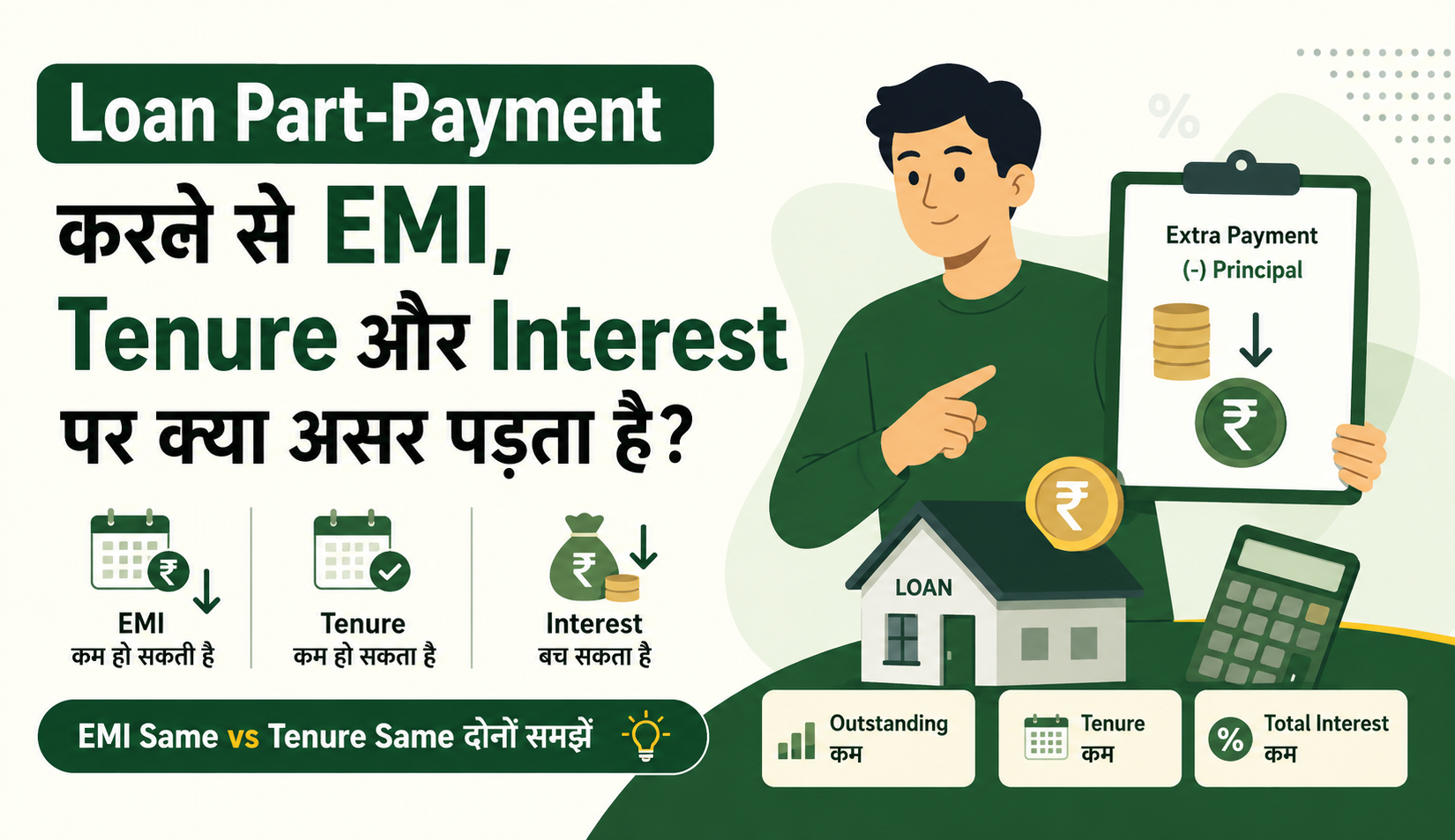
मान लीजिए आपका Loan चल रहा है और अचानक आपके पास ₹1 लाख extra आ जाते हैं।
Bonus मिला, investment mature हुई या कुछ savings accumulate हो गईं।
अब सवाल है:
क्या इस ₹1 लाख को Loan में Part-Payment कर देना चाहिए?
और अगर आप Part-Payment करते हैं, तो आगे क्या होगा?
EMI कम होगी?
Loan जल्दी खत्म होगा?
Interest कितना बचेगा?
EMI same रखना बेहतर है या tenure same?
Part-Payment का असली फायदा समझने के लिए सिर्फ यह देखना काफी नहीं है कि आपने principal में ₹1 लाख जमा कर दिए। आपको यह देखना होगा कि उसके बाद outstanding principal, future interest और remaining tenure कैसे बदलते हैं।
सबसे पहले: Loan Part-Payment क्या होता है?
Part-Payment का मतलब है अपनी regular EMI के अलावा Loan principal का कुछ हिस्सा extra repay करना।
उदाहरण के लिए:
Outstanding Loan: ₹10,00,000
Regular EMI: ₹20,000
Extra Amount Available: ₹1,00,000
अगर lender की terms इसकी अनुमति देती हैं और आप ₹1 लाख Loan में जमा करते हैं, तो यह amount आपके outstanding principal को कम कर सकता है।
यानी conceptually:
₹10,00,000 Outstanding
− ₹1,00,000 Part-Payment
= लगभग ₹9,00,000 Revised Outstanding
लेकिन यहीं कहानी खत्म नहीं होती।
असली फायदा उसके बाद शुरू होता है।
Principal कम होने से Interest क्यों बच सकता है?
Reducing-balance Loan में interest आमतौर पर outstanding principal पर calculate होता है।
इसलिए:
Outstanding Principal कम → Future Interest Calculation का Base कम
यही Part-Payment का मुख्य financial effect है।
मान लीजिए किसी समय आपका outstanding ₹10 लाख है।
अगर आप Part-Payment नहीं करते हैं, तो आगे interest ₹10 लाख से शुरू होने वाले outstanding balance पर calculate होता रहेगा।
लेकिन अगर ₹1 लाख Part-Payment के बाद outstanding लगभग ₹9 लाख रह जाता है, तो आगे का interest comparatively छोटे balance पर calculate होगा।
इससे future interest कम हो सकता है।
Part-Payment का फायदा सिर्फ ₹1 लाख principal कम होना नहीं है — उस ₹1 लाख पर भविष्य में लगने वाला interest भी बच सकता है।
लेकिन Part-Payment के बाद EMI का क्या होगा?
यहीं दो अलग scenarios आते हैं।
Part-Payment के बाद lender/product terms के अनुसार repayment structure अलग हो सकता है। Educational comparison के लिए इसे दो तरीके से समझ सकते हैं:
Option 1 — EMI Same रखें, Tenure कम करें
या
Option 2 — Tenure Same रखें, EMI कम करें
दोनों में principal कम होता है, लेकिन उसका फायदा अलग तरीके से दिखाई देता है।
Option 1: EMI Same रखें → Loan जल्दी खत्म हो सकता है
मान लीजिए:
Loan Outstanding: ₹10 लाख
Interest Rate: 10%
Remaining Tenure: 10 साल
EMI: लगभग ₹13,215
कुछ समय बाद आप ₹1 लाख Part-Payment करते हैं
Part-Payment के बाद अगर EMI लगभग ₹13,215 ही रखी जाती है, तो अब वही EMI छोटे outstanding principal को repay कर रही है।
इसका मतलब:
EMI Same
लेकिन
Remaining Tenure ↓
Loan पहले खत्म हो सकता है।
और क्योंकि Loan कम समय तक चलता है:
Future Interest भी कम हो सकता है।
यही कारण है कि EMI same + tenure reduction वाला scenario अक्सर interest-saving impact को ज्यादा स्पष्ट दिखाता है।
लेकिन इसका मतलब यह नहीं कि यही हर व्यक्ति के लिए automatically सही option है।
Option 2: Tenure Same रखें → EMI कम हो सकती है
अब दूसरा scenario देखते हैं।
Part-Payment के बाद outstanding principal कम हो गया, लेकिन आप Loan की remaining duration नहीं बदलते।
तब revised outstanding के आधार पर EMI दोबारा calculate की जा सकती है।
इस situation में:
Tenure Same
लेकिन
EMI ↓
इसका फायदा अलग है।
Monthly cash-flow burden कम हो सकता है।
उदाहरण:
पहले EMI:
₹13,215/month
Part-Payment के बाद illustrative revised EMI:
₹X/month
यानी हर महीने कुछ cash flow free हो सकता है।
हालांकि exact EMI lender के calculation method, timing और terms पर निर्भर करेगी।
तो कौन-सा बेहतर है — EMI कम करना या Tenure?
इसका एक universal answer नहीं है।
इसे इस तरह समझिए:
Part-Payment के बाद | संभावित प्रभाव |
|---|---|
EMI Same | Tenure ज्यादा reduce हो सकती है |
Tenure Same | EMI कम हो सकती है |
EMI Same + shorter tenure | Future interest saving ज्यादा हो सकती है |
Lower EMI | Monthly cash-flow flexibility बढ़ सकती है |
अगर आपका monthly cash flow comfortable है, तो tenure reduction का impact समझना useful हो सकता है।
अगर monthly EMI itself आपके budget पर pressure डाल रही है, तो lower EMI scenario भी relevant हो सकता है।
FinMitraPro का calculator दोनों scenarios compare करने के लिए है — किसी एक को automatically “best” बताने के लिए नहीं।
₹1 लाख Part-Payment से कितना Interest बच सकता है?
इसका कोई fixed answer नहीं है।
यह मुख्य रूप से इन चीजों पर depend करता है:
Outstanding Principal
जितना बड़ा outstanding, उतना अलग impact हो सकता है।
Interest Rate
Higher rate पर principal reduction का future interest impact ज्यादा हो सकता है।
Remaining Tenure
अगर Loan में अभी काफी समय बाकी है, तो reduced principal पर interest बचने के लिए ज्यादा future months होते हैं।
Part-Payment Timing
Loan के शुरुआती वर्षों में Part-Payment और Loan के आखिरी कुछ महीनों में Part-Payment का impact समान नहीं होगा।
Part-Payment Amount
₹25,000, ₹1 लाख और ₹5 लाख का असर स्वाभाविक रूप से अलग होगा।
इसलिए सिर्फ यह पूछना:
“₹1 लाख Part-Payment करने पर कितना interest बचेगा?”
काफी नहीं है।
सही सवाल है:
“मेरे current outstanding, rate, remaining tenure और Part-Payment timing के आधार पर कितना future interest बच सकता है?”
Part-Payment कब करते हैं, इससे इतना फर्क क्यों पड़ता है?
यह बहुत important point है।
मान लीजिए आपने 20 साल का Loan लिया है।
Scenario A
आप Loan शुरू होने के 2 साल बाद ₹2 लाख Part-Payment करते हैं।
Scenario B
आप वही ₹2 लाख Loan खत्म होने से सिर्फ 2 साल पहले Part-Payment करते हैं।
दोनों में principal ₹2 लाख कम किया गया।
लेकिन interest-saving impact जरूरी नहीं कि समान हो।
क्यों?
क्योंकि Scenario A में reduced principal का असर कई वर्षों के future interest calculations पर पड़ सकता है।
Scenario B में Loan में बहुत कम समय बचा है।
इसीलिए आम तौर पर:
Part-Payment का impact सिर्फ amount से नहीं, timing से भी तय होता है।
एक practical example से समझते हैं
मान लीजिए:
Loan Amount: ₹10,00,000
Interest Rate: 10% p.a.
Tenure: 10 Years
और 24 EMIs देने के बाद आपके पास:
₹1,00,000 extra
आ जाता है।
अब तीन situations compare करें:
बिना Part-Payment
Loan अपने existing repayment schedule के अनुसार चलता रहेगा।
₹1 लाख Part-Payment + EMI Same
24वीं EMI के बाद outstanding balance calculate होगा।
फिर:
Outstanding − ₹1,00,000
और अगली EMI से revised principal पर repayment continue होगी।
EMI same रहने के कारण Loan earlier close हो सकता है।
₹1 लाख Part-Payment + Tenure Same
Outstanding principal ₹1 लाख कम होगा।
लेकिन original remaining tenure maintain करने पर revised EMI कम हो सकती है।
यही calculation manually करना थोड़ा complicated हो सकता है।
इसलिए calculator ज्यादा useful है।
अपनी Loan Part-Payment का Impact खुद Calculate करें
FinMitraPro Loan EMI Calculator में:
Loan Amount डालें
Interest Rate डालें
Tenure डालें
Add Part-Payment खोलें
Part-Payment Amount डालें
बताएं कितनी EMIs के बाद payment करेंगे
चुनें:
Keep EMI Same → Reduce Tenure
Keep Tenure Same → Reduce EMI
Calculator आपको estimated impact दिखाएगा:
Outstanding Before Part-Payment
Outstanding After Part-Payment
Original vs Revised EMI
Original vs Revised Tenure
Estimated Interest Saved
Estimated Time Saved
यह comparison सिर्फ EMI देखने से कहीं ज्यादा useful है
Part-Payment को सही तरीके से calculate करना क्यों जरूरी है?
एक common mistake है:
Loan ₹10 लाख था और मैंने ₹1 लाख Part-Payment किया, इसलिए नया Loan ₹9 लाख मानकर calculation शुरू कर दो।
अगर आपने पहले ही 24 EMIs pay कर दी हैं, तो यह गलत हो सकता है।
पहले 24 EMIs में principal का कुछ हिस्सा repay हो चुका होगा।
इसलिए सही calculation sequence है:
Original Loan
↓
पहले N EMIs
↓
उस समय का Outstanding Principal
↓
Part-Payment
↓
Revised Outstanding
↓
नई Repayment Schedule
यही approach FinMitraPro calculator में भी use होनी चाहिए।
Part-Payment के बाद Repayment Schedule कैसे बदलती है?
मान लीजिए Part-Payment EMI #24 के बाद किया गया।
तब sequence roughly ऐसा होगा:
EMI #23 → Normal
EMI #24 → Normal
₹1,00,000 Part-Payment
EMI #25 → Revised Outstanding से calculation
अगर आपने Keep EMI Same चुना है, तो EMI लगभग वही रह सकती है लेकिन Loan जल्दी खत्म हो सकता है।
अगर आपने Keep Tenure Same चुना है, तो अगली EMI से revised EMI लागू हो सकती है।
इसीलिए calculator में Part-Payment को सिर्फ एक अलग result card नहीं होना चाहिए — पूरी repayment schedule को reschedule करना जरूरी है।
Part-Payment और Foreclosure में क्या फर्क है?
दोनों एक चीज नहीं हैं।
Part-Payment
Loan का कुछ हिस्सा extra repay करना।
उदाहरण:
Outstanding ₹8 लाख है और आपने ₹2 लाख extra जमा किए।
Loan बाकी amount के साथ continue करता है।
Foreclosure / Full Prepayment
पूरा outstanding Loan समय से पहले repay करके Loan close करना।
इसलिए:
Part-Payment = Partial early repayment
Foreclosure = Complete early repayment
Charges और eligibility भी अलग हो सकती हैं।
क्या Part-Payment पर Charges लग सकते हैं?
यह आपके Loan type, interest-rate structure, lender और applicable rules/terms पर निर्भर करता है।
इसलिए Part-Payment करने से पहले सिर्फ interest saving न देखें।
यह भी check करें:
Part-Payment allowed है या नहीं?
Minimum Part-Payment कितना है?
एक साल में कितनी बार allowed है?
कोई applicable charge है?
Fixed और floating-rate Loan के rules अलग हैं?
Part-Payment के बाद lender EMI reduce करेगा या tenure?
क्या आपको specific request देनी होगी?
RBI की floating-rate EMI-based personal-loan framework में borrowers के लिए part/full prepayment का विकल्प शामिल है, जबकि applicable foreclosure/prepayment charges अलग regulatory instructions के अधीन रहते हैं.
इसलिए अपने specific Loan के लिए lender की latest terms और applicable rules check करना जरूरी है।
Prepayment Charge हो तो क्या सिर्फ Interest Saved देखना चाहिए?
नहीं।
मान लीजिए calculator दिखाता है:
Estimated Interest Saving: ₹40,000
लेकिन hypothetical applicable Part-Payment charge:
₹5,000
तब decision के लिए सिर्फ ₹40,000 देखना अधूरा होगा।
एक useful comparison है:
Estimated Net Saving
≈
Estimated Interest Saving − Applicable Prepayment Charge
हालांकि actual charges और tax treatment lender/product terms के अनुसार अलग हो सकते हैं।
Part-Payment करने से पहले Emergency Fund का क्या?
मान लीजिए आपके पास ₹2 लाख extra हैं और आप पूरा ₹2 लाख Loan में डाल देते हैं।
Outstanding जरूर कम हो सकता है।
लेकिन अगर अगले महीने अचानक:
medical expense,
job disruption,
home repair,
school expense
आ जाए तो?
Loan में किया गया Part-Payment आम तौर पर आपके savings account जैसी immediate liquidity नहीं देता।
इसलिए Part-Payment को सिर्फ:
“Interest कितना बचेगा?”
के नजरिए से देखना incomplete है।
साथ में यह भी देखें:
“Part-Payment के बाद मेरे पास पर्याप्त emergency liquidity बचेगी?”
Part-Payment vs पैसा Invest करना?
यह थोड़ा अलग decision है।
मान लीजिए Loan rate 9% है और आपके पास ₹2 लाख extra हैं।
आपके सामने broadly दो possibilities हो सकती हैं:
Loan Principal Reduce करना
या
पैसा Invest करना
लेकिन दोनों numbers directly equivalent नहीं हैं।
Loan में future interest saving contractual loan cash flows से जुड़ी है।
Investment return guaranteed नहीं होता और market risk, tax, time horizon तथा product पर depend करता है।
इसलिए:
“Loan rate 9% है और investment 12% दे देगा, इसलिए invest करना हमेशा better है”
जैसा shortcut सही decision framework नहीं है।
इसी comparison के लिए FinMitraPro का अलग Home Loan Prepayment vs Investment Calculator ज्यादा relevant है.
अगर Interest Rate बढ़ जाए तो Part-Payment useful हो सकता है?
यह भी interesting situation है।
Floating-rate Loan में rate बढ़ने पर lender terms के अनुसार EMI बढ़ सकती है, tenure बढ़ सकती है या दोनों में adjustment हो सकता है। RBI के framework में applicable EMI-based floating-rate personal loans के borrowers को EMI enhancement, tenor elongation या दोनों के combination जैसे choices दिए जाने की बात है; part/full prepayment भी available option हो सकता है.
ऐसी situation में Part-Payment outstanding principal कम कर सकता है।
लेकिन इसका actual impact आपके:
Outstanding + New Rate + Remaining Tenure + Part-Payment Amount
पर depend करेगा।
इसीलिए सिर्फ rate देखकर फैसला करने के बजाय numbers calculate करना ज्यादा useful है।
Part-Payment से पहले ये 7 चीजें जरूर देखें
Current Outstanding Principal
Current Interest Rate
Remaining Tenure
Part-Payment Amount
Part-Payment Timing
Applicable Charges / Restrictions
Part-Payment के बाद बचने वाली Emergency Liquidity
और फिर calculator में दोनों scenarios compare करें:
EMI Same → Tenure कितनी कम?
Tenure Same → EMI कितनी कम?
📖 Summary
1. Part-Payment regular EMI के अलावा Loan principal का कुछ हिस्सा जल्दी repay करना है।
2. Outstanding principal कम होने से future interest कम हो सकता है।
3. EMI same रखने पर Loan tenure कम हो सकती है और Loan जल्दी खत्म हो सकता है।
4. Tenure same रखने पर revised EMI कम हो सकती है।
5. Interest saving सिर्फ Part-Payment amount पर नहीं—interest rate, timing और remaining tenure पर भी depend करती है।
6. Applicable Part-Payment charges/restrictions check करना जरूरी है।
7. सिर्फ interest saving नहीं—Part-Payment के बाद emergency liquidity भी देखें।