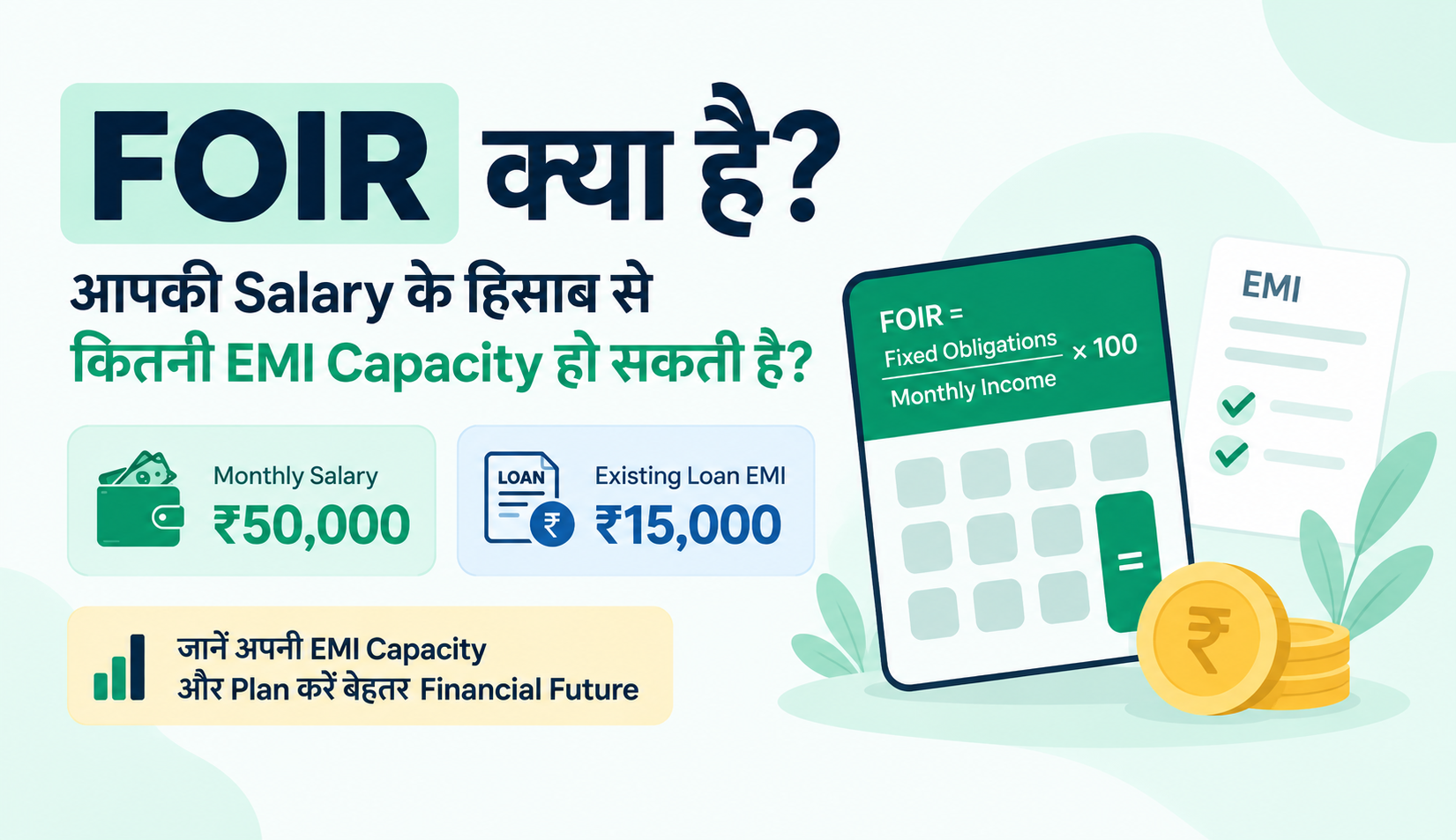
आपकी monthly salary ₹50,000 है।
एक Loan पहले से चल रहा है, जिसकी EMI ₹15,000 per month है।
अब आपको दूसरा Loan चाहिए।
तो सबसे पहला सवाल शायद यही होगा:
“एक Loan पहले से चल रहा है, तो क्या मुझे दूसरा Loan मिल सकता है?”
इसका answer सिर्फ आपकी salary या credit score देखकर नहीं निकाला जा सकता।
Lender यह भी देख सकता है कि आपकी monthly income का कितना हिस्सा पहले से existing Loan EMIs और दूसरी fixed debt obligations में जा रहा है।
यहीं FOIR — Fixed Obligations to Income Ratio को समझना useful हो जाता है।
FOIR broadly यह समझने में मदद करता है:
आपकी monthly income का कितना हिस्सा पहले से fixed debt obligations में जा रहा है?
और अगर एक नई EMI जुड़ जाए, तो आपकी total monthly debt obligation income के मुकाबले कितनी हो जाएगी?
FOIR क्या है?
FOIR का full form है:
Fixed Obligations to Income Ratio
Simple भाषा में:
आपकी monthly income के मुकाबले आपकी fixed monthly debt obligations का ratio।
इसका basic formula है:
FOIR = Total Monthly Fixed Obligations ÷ Monthly Income × 100
अब अपने ₹50,000 वाले example पर आते हैं।
Monthly Net Income: ₹50,000
Existing Loan EMI: ₹15,000
Calculation:
₹15,000 ÷ ₹50,000 × 100 = 30%
यानी आपकी monthly income का लगभग 30% existing Loan EMI में जा रहा है।
यही आपकी current FOIR का एक simple illustration है।
एक Loan चल रहा है — क्या दूसरा Loan मिल सकता है?
अब असली सवाल पर आते हैं।
आपकी:
Salary = ₹50,000
और:
Existing EMI = ₹15,000
है।
इसका मतलब यह नहीं है कि दूसरा Loan automatically मिलेगा या नहीं मिलेगा।
नई Loan eligibility evaluate करते समय lender कई factors देख सकता है, जैसे:
income
existing EMIs
repayment history
credit profile
employment/business profile
age
Loan type
requested amount
lender की internal credit policy
FOIR इस पूरी assessment का सिर्फ एक हिस्सा हो सकता है।
इसलिए:
FOIR हमें Loan approval नहीं बताती। यह existing debt burden को income के context में समझने में मदद करती है।
₹50,000 Salary + ₹15,000 EMI का FOIR कितना है?
इसे एक table में देखें:
Particular | Amount |
|---|---|
Monthly Net Income | ₹50,000 |
Existing Loan EMI | ₹15,000 |
Current FOIR | 30% |
अब सवाल है:
नई EMI के लिए कितनी capacity बच सकती है?
यह answer निकालने के लिए हमें एक FOIR assumption चाहिए।
मान लीजिए सिर्फ educational illustration के लिए हम:
50% FOIR
use करते हैं।
यह RBI का universal limit या हर bank का fixed rule नहीं है। यह केवल calculation समझाने के लिए assumption है।
अब:
₹50,000 × 50% = ₹25,000
इस assumption पर maximum total monthly fixed obligation:
Existing EMI:
तो estimated additional EMI capacity:
₹25,000 − ₹15,000
=
लेकिन इस ₹10,000 को सही तरीके से समझना बहुत जरूरी है।
यह नहीं कह रहा:
❌ “Bank आपको ₹10,000 की दूसरी EMI approve करेगा।”
यह सिर्फ कह रहा है:
50% illustrative FOIR assumption पर existing ₹15,000 EMI के बाद mathematical additional EMI capacity लगभग ₹10,000 बनती है।
FOIR 50% ही क्यों लिया?
यह सिर्फ example है।
यही इस article का एक important lesson है।
Online आपको अलग-अलग numbers मिल सकते हैं:
40%
45%
50%
55%
या
60%
लेकिन किसी एक percentage को सभी lenders, सभी borrowers और सभी Loan products के लिए universal rule नहीं मानना चाहिए।
Actual assessment lender की policy और borrower profile के अनुसार अलग हो सकती है।
इसलिए FinMitraPro calculator में अलग-अलग FOIR assumptions compare करना ज्यादा useful है।
अलग FOIR पर EMI Capacity कितनी होगी?
हमारी salary वही रखते हैं:
और existing EMI:
अब अलग illustrative FOIR assumptions देखें:
Assumed FOIR | Maximum Total EMI | Existing EMI | Estimated Additional EMI Capacity |
|---|---|---|---|
40% | ₹20,000 | ₹15,000 | ₹5,000 |
45% | ₹22,500 | ₹15,000 | ₹7,500 |
50% | ₹25,000 | ₹15,000 | ₹10,000 |
55% | ₹27,500 | ₹15,000 | ₹12,500 |
60% | ₹30,000 | ₹15,000 | ₹15,000 |
अब फर्क साफ दिखाई देता है।
अगर कोई सिर्फ पूछे:
“₹50,000 salary पर कितनी नई EMI मिल सकती है?”
तो उसका एक fixed answer नहीं है।
Selected FOIR assumption बदलते ही mathematical capacity भी बदल रही है।
अपनी FOIR और EMI Capacity खुद Calculate करें
अब आप अपने numbers डालकर calculation कर सकते हैं।
FinMitraPro के interactive FOIR Calculator में enter करें:
₹10,000 EMI से कितना दूसरा Loan बन सकता है?
अब calculation को एक step आगे ले जाते हैं।
हमारे example में:
Salary: ₹50,000
Existing EMI: ₹15,000
Selected FOIR assumption: 50%
Estimated additional EMI capacity आई:
अब सवाल:
₹10,000 EMI approximately कितने Loan amount को support कर सकती है?
इसके लिए हमें दो और assumptions चाहिए:
Interest Rate: 12% p.a.
Loan Tenure: 5 Years
Reducing-balance EMI mathematics के आधार पर ₹10,000 monthly EMI लगभग:
के Loan principal को support कर सकती है।
लेकिन यहाँ language बहुत important है।
यह कहना गलत होगा:
❌ “आप ₹4.5 लाख Loan के लिए eligible हैं।”
सही interpretation है:
“₹10,000 EMI, 12% interest rate और 5-year tenure की इन assumptions पर estimated Loan principal लगभग ₹4.5 लाख हो सकता है।”
Actual lender sanction इससे कम, ज्यादा या zero भी हो सकता है।
नई EMI जोड़ने के बाद FOIR क्या होगी?
अब मान लीजिए proposed second Loan की EMI:
है।
पहले से existing EMI:
तो total fixed monthly Loan obligations:
₹15,000 + ₹10,000 = ₹25,000
Monthly income:
₹50,000
अब:
₹25,000 ÷ ₹50,000 × 100
=
इसलिए:
Current FOIR = 30%
और illustrative नई ₹10,000 EMI के बाद:
FOIR = 50%
यह Before vs After comparison user को सिर्फ EMI amount देखने से ज्यादा context देता है।
अगर दूसरी Loan EMI ₹15,000 हो तो?
अब proposed EMI को ₹10,000 की जगह:
कर देते हैं।
Existing EMI:
₹15,000
New EMI:
₹15,000
Total:
₹30,000
Salary:
₹50,000
FOIR:
₹30,000 ÷ ₹50,000 × 100
=
अब वही borrower है।
Salary भी वही है।
Existing Loan भी वही है।
सिर्फ proposed EMI बदलने से total debt burden:
30% → 60%
हो गया।
यही कारण है कि:
“दूसरा Loan मिलेगा?”
का answer सिर्फ Yes/No में समझना useful नहीं है।
पहले यह समझना ज्यादा useful है कि नई EMI आपके overall debt burden को कैसे बदल रही है।
Interest Rate बदलने पर Loan Capacity क्यों बदलती है?
मान लीजिए आपकी estimated additional EMI capacity:
ही रहती है।
लेकिन दो lenders अलग interest rates offer करते हैं।
एक:
10%
दूसरा:
14%
और tenure दोनों में 5 years है।
Higher interest rate पर उसी EMI का बड़ा हिस्सा interest में जा सकता है।
इसलिए broadly:
Same EMI + Higher Interest Rate → Lower Loan Principal Capacity
और:
Same EMI + Lower Interest Rate → Higher Loan Principal Capacity
इसलिए सिर्फ:
“मैं ₹10,000 EMI दे सकता हूं”
से Loan amount determine नहीं होता।
EMI + Interest Rate + Tenure
तीनों साथ में देखना जरूरी है।
Tenure बढ़ाने से Loan Capacity क्यों बढ़ती दिख सकती है?
अब EMI और rate same रखते हैं:
EMI: ₹10,000
Interest Rate: 12%
लेकिन tenure compare करते हैं:
3 Years
vs
5 Years
vs
7 Years
Longer tenure में repayment ज्यादा महीनों में spread होती है।
इसलिए same ₹10,000 EMI mathematically larger principal को support कर सकती है।
लेकिन यहाँ एक trade-off है:
Longer tenure से EMI manageable दिख सकती है, लेकिन Total Interest बढ़ सकता है।
इसलिए सिर्फ ज्यादा Loan capacity देखकर tenure choose करना incomplete approach है।
EMI, Total Interest और Total Repayment तीनों compare करें।
FOIR-based EMI Capacity और Affordable EMI एक ही चीज हैं?
नहीं।
यह article का शायद सबसे important हिस्सा है।
हमारे example में:
Salary: ₹50,000
Existing EMI: ₹15,000
और 50% illustrative assumption पर:
Additional EMI Capacity: ₹10,000
लेकिन मान लीजिए उसी व्यक्ति के monthly household commitments हैं:
Rent: ₹12,000
Household Expenses: ₹12,000
School/Family Expenses: ₹5,000
Insurance/Medical: ₹3,000
अब सिर्फ FOIR देखकर ₹10,000 की नई EMI को comfortable कहना सही नहीं होगा।
क्योंकि FOIR और आपका personal household cash flow अलग चीजें हैं।
FOIR vs Personal Affordability
Simple difference:
FOIR पूछती है:
Income का कितना हिस्सा fixed debt obligations में जा रहा है?
Personal Affordability पूछती है:
EMIs, household expenses, savings और जरूरी commitments के बाद मेरे पास वास्तव में कितना पैसा बचता है?
इसलिए:
Low FOIR का मतलब automatically यह नहीं कि नई EMI आपके budget के लिए comfortable है।
और calculator में दिखाई गई:
Estimated EMI Capacity
को:
“Safe EMI”
नहीं समझना चाहिए।
Existing Loan खत्म हो जाए तो क्या होगा?
अब एक interesting scenario देखते हैं।
Current:
Salary: ₹50,000
Existing EMI: ₹15,000
Current FOIR:
मान लीजिए कुछ महीनों बाद यह Loan पूरी तरह close हो जाता है।
Existing fixed Loan EMI:
₹15,000 → ₹0
Current FOIR mathematically:
अगर educational comparison के लिए 50% assumption रखें:
Maximum total EMI:
₹50,000 × 50%
=
पहले estimated additional EMI capacity:
₹10,000
थी।
Existing Loan खत्म होने के बाद उसी assumption पर mathematical capacity:
हो जाती है।
इसका मतलब यह नहीं कि lender automatically ₹25,000 EMI approve करेगा।
लेकिन यह दिखाता है कि existing Loan closure FOIR calculation को materially बदल सकता है।
Salary बढ़कर ₹60,000 हो जाए तो?
अब existing EMI वही रखते हैं:
लेकिन salary:
₹50,000 → ₹60,000
हो जाती है।
पहले FOIR:
₹15,000 ÷ ₹50,000 × 100 = 30%
नई salary पर:
₹15,000 ÷ ₹60,000 × 100
=
अगर illustrative FOIR assumption 50% रखें:
Maximum total EMI:
₹60,000 × 50% = ₹30,000
Existing EMI:
₹15,000
Estimated remaining EMI capacity:
यानी income change भी FOIR और estimated capacity को बदल सकती है।
अगर Existing EMI ही ₹30,000 हो तो?
अब दूसरा edge case समझते हैं।
Salary: ₹50,000
Existing EMI: ₹30,000
Current FOIR:
₹30,000 ÷ ₹50,000 × 100
=
लेकिन calculator में आपने illustrative assumption चुना:
50% assumption पर maximum total EMI:
₹25,000
जबकि existing EMI ही:
₹30,000
है।
यहाँ calculator को:
❌ “Loan Rejected”
नहीं कहना चाहिए।
और:
❌
Additional Capacity = -₹5,000
भी नहीं दिखाना चाहिए।
Better output:
Estimated Additional EMI Capacity: ₹0
साथ में:
आपकी existing fixed obligations selected FOIR assumption तक पहुँच चुकी हैं या उससे ऊपर हैं।
Actual Loan eligibility lender decide करेगा।
कौन-सी EMIs FOIR में Include हो सकती हैं?
Exact methodology lender-specific हो सकती है।
Fixed debt obligations के examples हो सकते हैं:
Home Loan EMI
Personal Loan EMI
Car Loan EMI
Consumer Loan EMI
Existing Credit Card EMI
Other regular Loan repayments
इसलिए अगर आपके कई Loans चल रहे हैं, तो सिर्फ सबसे बड़ी EMI डालकर FOIR calculate करना सही picture नहीं देगा।
Relevant fixed obligations को together देखना ज्यादा useful है।
Credit Card का क्या?
अगर Credit Card पर कोई fixed EMI चल रही है, तो वह debt obligation assessment में relevant हो सकती है।
लेकिन:
Credit Limit
और
Monthly Fixed Card Obligation
एक ही चीज नहीं हैं।
इसलिए FinMitraPro calculator में field होना चाहिए:
Credit Card EMI / Fixed Card Obligation
ना कि सिर्फ:
“Credit Card Limit”
Actual lender card obligations को कैसे treat करता है, यह उसकी methodology पर depend करेगा।
Rent, Grocery और School Fees FOIR में आएंगे?
FinMitraPro educational calculator normal household expenses को automatically fixed debt obligations में नहीं जोड़ेगा।
लेकिन इसका मतलब यह नहीं कि इन expenses को ignore करना चाहिए।
उदाहरण:
आपकी FOIR mathematically अच्छी दिख सकती है।
लेकिन अगर income का बड़ा हिस्सा:
rent
school fees
household expenses
medical expenses
insurance
family responsibilities
में जा रहा है, तो आपकी personal EMI affordability FOIR-based capacity से कम हो सकती है।
इसीलिए calculator के result के साथ personal cash flow भी देखें।
FOIR और Credit Score में क्या फर्क है?
दोनों अलग concepts हैं।
FOIR
Income के मुकाबले existing fixed debt obligations को समझती है।
Credit Score
आपकी credit history और credit behaviour से जुड़ा अलग indicator है।
किसी व्यक्ति का credit score अच्छा हो सकता है लेकिन उसकी existing EMIs बहुत ज्यादा हों।
और किसी दूसरे व्यक्ति की FOIR relatively low हो सकती है, लेकिन उसका overall credit profile lender की policy पूरी न करे।
इसलिए:
Credit Score + FOIR + Income + Existing Debt + Lender Policy
सभी अलग-अलग pieces हैं।
क्या कम FOIR होने पर दूसरा Loan Guaranteed है?
नहीं।
FOIR Loan assessment का सिर्फ एक हिस्सा हो सकती है।
Actual lender अन्य factors भी evaluate कर सकता है:
Credit history
Repayment record
Income stability
Employment/business profile
Age
Existing liabilities
Requested Loan amount
Loan product
Lender की internal policy
इसलिए:
Good FOIR ≠ Guaranteed Loan Approval
और इसी तरह:
High FOIR ≠ Automatically Rejected
Final assessment lender-specific होती है।
दूसरा Loan लेने से पहले क्या देखें?
मान लीजिए आपका current example है:
Salary ₹50,000
Existing EMI ₹15,000
और आप दूसरी EMI लेने के बारे में सोच रहे हैं।
तो सिर्फ:
“Bank कितना Loan देगा?”
न पूछें।
इन numbers को भी देखें:
Current FOIR कितनी है?
नई EMI के बाद FOIR कितनी होगी?
नई EMI के बाद household cash flow कितना बचेगा?
Emergency fund है?
Interest rate कितना है?
Processing Fee और applicable charges कितने हैं?
Loan tenure कितनी है?
Total Interest कितना होगा?
Total Repayment कितना होगा?
यानी FOIR को decision का एक input समझें, पूरा decision नहीं।
FOIR Calculator Result को कैसे पढ़ें?
मान लीजिए FinMitraPro calculator में आपने डाला:
Monthly Net Income: ₹50,000
Existing EMI: ₹15,000
Selected FOIR Assumption: 50%
Interest Rate: 12%
Tenure: 5 Years
Calculator दिखाता है:
Current FOIR
Maximum Total EMI at Selected FOIR
Existing EMI
Estimated Additional EMI Capacity
Estimated Additional Loan Capacity
लगभग ₹4.5 लाख
इस result को ऐसे पढ़ें:
“मेरी current fixed Loan obligation income का 30% है। अगर educational comparison के लिए 50% FOIR assumption लिया जाए, तो existing EMI के बाद लगभग ₹10,000 additional monthly capacity बनती है। 12% और 5-year assumptions पर यह EMI mathematically करीब ₹4.5 लाख Loan principal को support कर सकती है।”
इसे ऐसे न पढ़ें:
❌ “मैं ₹4.5 लाख Loan के लिए eligible हूं।”
दोनों statements में बहुत बड़ा फर्क है।
FinMitraPro Note
“Bank कितनी EMI consider कर सकता है?” और “आप कितनी EMI comfortably afford कर सकते हैं?” — ये दोनों अलग सवाल हैं।
FOIR पहले सवाल को समझने में useful context दे सकती है।
आपका household budget, emergency fund, savings और financial commitments दूसरे सवाल को समझने में मदद करते हैं।
इसलिए Estimated EMI Capacity को अपनी spending limit न समझें।
📖 Summary
1. FOIR का full form Fixed Obligations to Income Ratio है।
2. ₹50,000 salary और ₹15,000 existing EMI पर illustrative current FOIR 30% है।
3. अगर educational comparison के लिए 50% FOIR assumption लें, तो maximum total EMI ₹25,000 बनती है।
4. Existing ₹15,000 EMI निकालने के बाद estimated additional EMI capacity ₹10,000 रहती है।
5. ₹10,000 EMI, 12% rate और 5-year tenure पर mathematically करीब ₹4.5 लाख Loan principal support कर सकती है। यह Loan eligibility नहीं है।
6. 40%, 50% या 60% को universal FOIR rule नहीं समझना चाहिए। Actual lender criteria अलग हो सकते हैं।
7. FOIR-based EMI capacity और personal affordability अलग हैं।
8. FOIR Calculator का result किसी Loan approval या sanction की guarantee नहीं है।